
A lost dog flyer can make a brief sighting useful, but only when it is clear enough for someone to act on quickly. The point is not to tell your whole story. It is to help a neighbor recognize your dog, understand how to respond, and give you a report you can use. Start with the copy-ready template below, then use flyers as one part of a calm, sighting-led search.
1. Put the most useful details where people will see them first
A person may notice your flyer while leaving work, walking a dog, or driving through the neighborhood. Give them the information they can absorb in seconds: a recent, sharp photo; a large “LOST DOG” headline; your dog’s name; the last known area; and one phone number you can answer or check often.
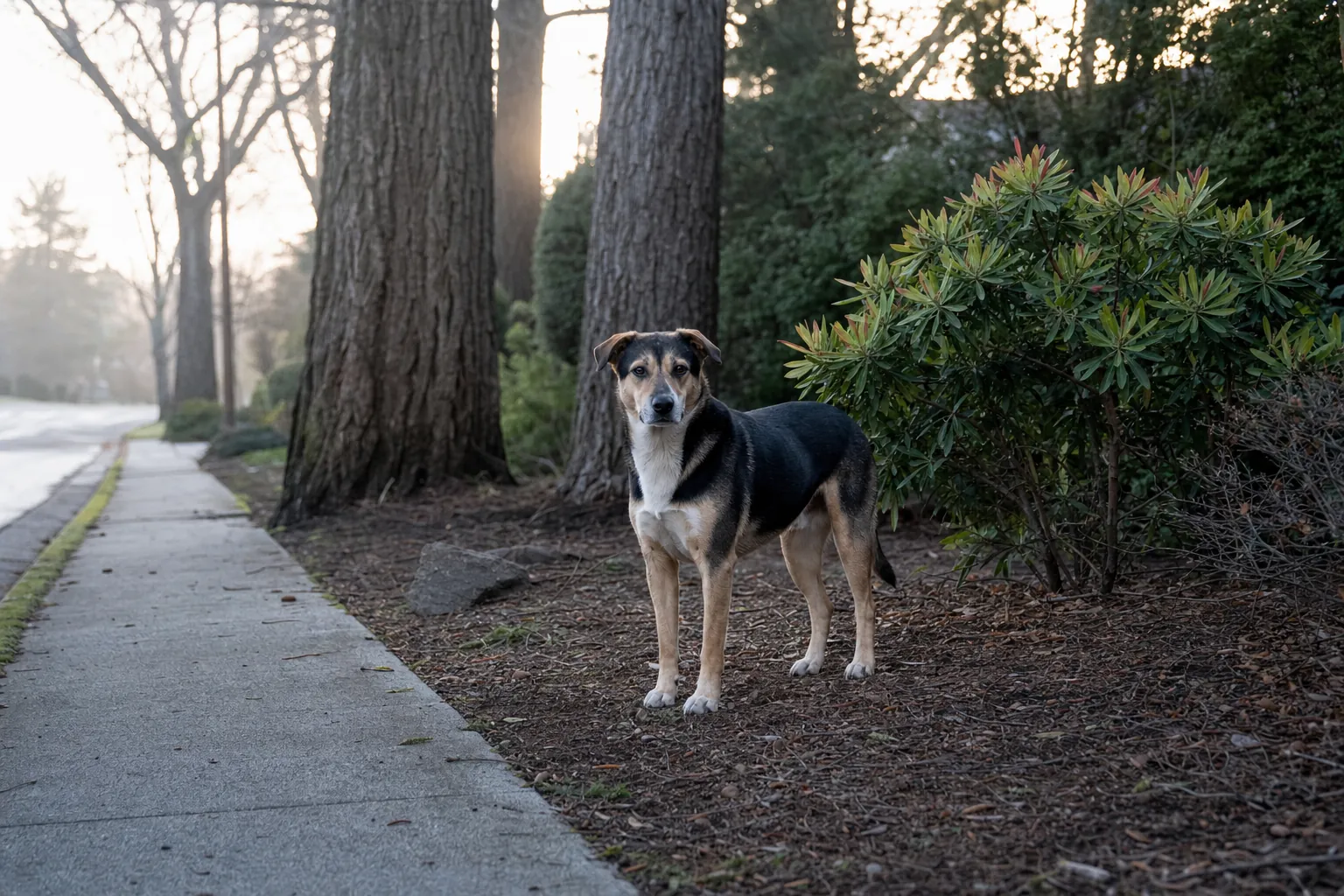
Choose a photo that shows your dog’s face, coat, and size clearly. A photo from everyday life usually works better than a distant outdoor shot, a heavy filter, or a photo with several pets in it. Add only a few identifying details that someone could recognize from a distance, such as a white chest, a dark ear, a red collar, or a limp. The Pet FBI flyer tool is a useful option when you need a ready-made printable format.
Keep your contact details simple and private. A cross street, neighborhood, trailhead, or nearby landmark is usually enough to explain where your dog was last seen. Leave off your full address, microchip number, and any detail you plan to use later to verify a caller. A clear flyer gives people enough to help without giving scammers more information than they need.

2. Copy-ready lost dog flyer template
Replace the bracketed details, add a large current photo, and keep the final page easy to scan. If a detail does not help someone recognize your dog, safely respond to a sighting, or reach you, leave it out. Bright paper can help a flyer stand out, but dark type, a good photo, and clear spacing matter more than a decorative design.
LOST DOG
[DOG'S NAME]
- Color and markings: [for example: tan and black, white chest, red collar]
- Last seen: [date and time] near [cross streets, neighborhood, or landmark]
- Behavior: [for example: scared, may run, please do not chase]
- Helpful details: [size, harness, medical need, or distinctive feature if relevant]
PLEASE CALL OR TEXT: [PHONE NUMBER]PHOTO OR EXACT LOCATION APPRECIATED
If seen, please do not chase. Note the time, exact location, and direction of travel.
3. Add a clear instruction when your dog may be frightened
A lost dog may not behave like the dog people know at home. Fear, traffic, unfamiliar surroundings, injury, or a crowd can make even a friendly dog keep moving. If that describes your dog, put a short instruction in a highly visible place: “PLEASE DO NOT CHASE” or “SCARED, PLEASE CALL WITH LOCATION.” It tells a helpful stranger how to avoid turning a sighting into another flight.
Do not ask people to grab, corner, or call loudly toward a dog they see. Ask them to keep a safe distance, send you the exact location, note the direction the dog went, and take a photo or video if they can do so without increasing pressure. The Humane Society’s lost-pet guidance reinforces the value of prompt reporting and a current photo while a search is underway.
Your flyer should match the plan you give nearby helpers. The more a frightened dog is pursued, the harder it can be to predict the next movement. Lindsey’s lost-dog search guide explains how to turn a detailed sighting into a calmer recovery decision, especially after dark.
4. Make the flyer readable from a few feet away
Put “LOST DOG” at the top in the largest type. Place the photo directly below it. The phone number should be dark, large, and easy to read near the bottom. Use short lines, wide spacing, and a clean background. A person should not need to stop and study the page to understand what they are looking at.
Avoid several small photos, a long personal message, or a page crowded with every possible detail. You can share more when someone calls. On the flyer, a recent photo, a short description, the last known area, a safety instruction, and a response number are the parts that do the real work. The Adopt a Pet poster guide also emphasizes clear identifying information and a contact method that can be checked quickly.
If your dog has a special need, include it only when it helps someone respond safely. “Needs medication” can be useful. A detailed medical history is not. “May be injured” can prompt a person to call rather than approach. Keep the message focused on the next helpful action.

5. Start close and post with permission
Begin around the last confirmed location, not the widest possible radius. Talk with nearby residents, postal carriers, walkers, pet businesses, veterinary offices, shelters, and local community boards. Ask before putting up a notice, especially on storefronts, utility poles, private property, or managed community spaces. A respectful request usually gets a better response than leaving a flyer where it may be removed immediately.
Bring a small stack of flyers when you ask people to check a specific place. A direct conversation can be more valuable than the paper itself. Let someone know whether your dog may hide under a porch, follow food, avoid strangers, or run if approached. Then ask for the time, location, direction, and photo if they see anything.
Do not blanket distant areas just because time has passed. Expand when a credible sighting, camera image, or dependable report gives you a direction. A flyer becomes more useful when it creates a nearby network of people who recognize your dog and know how to report a calm observation.
6. Share the same clear message online
Use the same current photo, phone number, location, and wording in local lost-pet groups and neighborhood pages. Consistency helps a person connect an online post with the paper flyer they saw on a notice board or telephone pole. If a detail changes, such as a new sighting area, update the post and make the change clear rather than creating several conflicting versions.
Keep online posts focused on useful facts. A recent photo, the last known area, the direction of travel if known, and a request to call or text with a sighting can travel much further than a long story. Ask people not to chase a frightened dog. A calm report with a location, time, and photo or description gives you something you can act on.
It can help to ask one trusted friend to watch replies while you search. That keeps the information moving without leaving you to manage every message alone. Save screenshots or notes from meaningful reports, then adjust where you place flyers based on the most recent credible sighting.
7. Keep an organized record of every flyer and sighting
Write down where each flyer is placed, who agreed to post it, and when you need to return. Check notices after rain, wind, or a few days of heavy foot traffic. Replace damaged pages, remove a flyer that has been covered, and take them down promptly when your dog is home.
Keep sightings in the same place as your flyer list. For each report, note the date, time, exact location, direction of travel, dog description, caller name, contact details, photo or video, and what happened next. One detailed sighting can matter far more than ten vague messages. It also prevents the search team from retracing the same ground while a fresh lead waits for follow-up.
Use the record to look for patterns. If several people see your dog near the same open space, business, yard, or route, a calm observation plan may be stronger than sending more people out to search randomly. If there are no credible reports, return to the last known location and the nearby places that may have been missed.
Make a simple decision rule before messages start arriving: a report changes the plan only when it includes enough detail to check. A clear photo, a specific time, an exact location, or a reliable description can give your next search step a purpose. A message that only says “I think I saw a dog like that” may still be kind, but it is not enough to pull everyone away from a better lead.
When a report is credible, update the flyers nearest to that area rather than starting from scratch. Tell the people who posted your first notices that the dog may have moved, and ask them to share the new last-known location with anyone who calls. This keeps your public message consistent while your closer search becomes more precise.

8. Protect yourself from reward and recovery scams
Most people who reach out want to help. Still, a lost-dog flyer can draw someone looking to exploit a worried guardian. Be cautious when a caller demands payment before sharing a current photo, refuses to give a location, says they need a code sent to your phone, or pressures you to act before you can verify the report.
Ask for a detail that was not included on the flyer, such as a collar mark, a scar, a particular behavior, or the precise place the dog was seen. If someone says they have your dog, ask for a current photo. Do not send money, gift cards, passwords, or verification codes to prove ownership. Take down the information, breathe, and decide the next safe step.
If your dog is near traffic, water, rail lines, an aggressive animal, or any immediate hazard, call the right local animal-control, emergency, veterinary, shelter, rescue, or public-safety resource. A flyer is a communication tool. It is not a reason to make a rushed recovery attempt that puts the dog or a person at greater risk.
When structured intuitive support may fit
Flyers work best alongside practical action: a close search, clear local reports, shelter and veterinary notifications, documented sightings, and urgent professional help when it is needed. If you are already taking those steps and want added structured support, Lindsey’s Lost Pet Location Protocol is designed for active missing-pet cases.
The process begins with Animal Communication Reiki and a written report completed before map information is reviewed. It does not offer live tracking, ongoing monitoring, or a promise that a pet will return. It is supportive guidance for guardians who want a documented process alongside a real-world search. Lindsey’s lost-pet support overview explains the service boundaries and when a request may be a fit.
Keep this close
Lost dog flyer checklist
- Use one current, clear photo and a large “LOST DOG” headline.
- Include a short description, the last known area, date and time, and one monitored contact number.
- Add “please do not chase” when a scared dog may run from people.
- Post with permission near the last known location, then let verified sightings guide expansion.
- Record flyer locations and sighting details, and verify every recovery claim before you act.
Frequently asked questions
Questions pet guardians often ask
What should I put on a lost dog flyer?
Use a recent, clear photo; your dog’s name; a short physical description; the last known area; the date and time they went missing; and one phone number you can monitor. Add a brief note such as “do not chase” when your dog is fearful or likely to run.
Should I put a reward on a lost dog flyer?
That is your decision, but do not include an amount unless you are prepared for increased scam risk. Anyone claiming to have your dog should be able to share a current photo or a specific detail that was not made public before you send money or share a verification code.
Where should I post lost dog flyers?
Start close to the last known location and ask permission before posting. Nearby homes, veterinary offices, shelters, community boards, pet businesses, and local storefronts can be useful places when the notice is allowed. Let confirmed sightings guide any wider posting.
What should I do if someone sees my lost dog?
Ask for the exact time, location, direction of travel, and a photo or video when possible. If the dog is frightened, ask the person not to chase, call out, or gather a crowd. A calm observation and a detailed report are often more useful than a rushed pursuit.
Should I put my address on a lost dog flyer?
Usually, no. A neighborhood, cross streets, or a nearby landmark gives people enough context to report a sighting without sharing your full home address. Keep your microchip number and any private verification details off the flyer.
Related posts
Continue your search planning
Lost Pet Searches
How to Find a Lost Dog at Night: A Practical Search Plan
A steady, practical nighttime search plan for organizing the first hours, responding safely to sightings, and bringing a missing dog home.
Read the guide →
Lost Pet Searches
Lost Cat Flyer Template: What to Include
A copy-ready lost-cat flyer template, plus practical guidance for sharing clear information, protecting privacy, and responding to leads.
Read the guide →