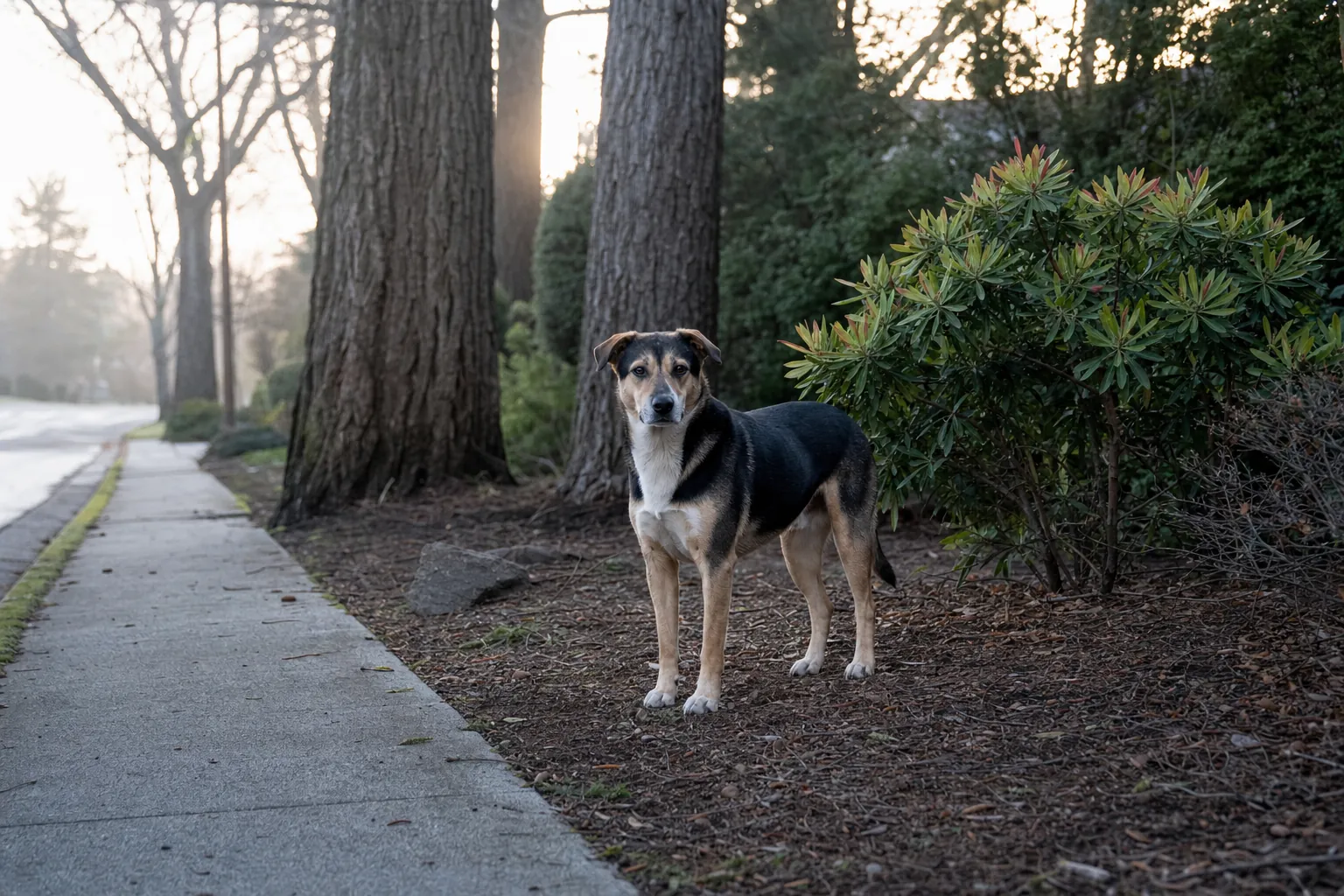
When a dog is missing, the first hours can feel frantic, especially after dark. The most helpful response is not to do everything at once. It is to slow down enough to protect your attention, start close, and build a search plan that other people can understand and support. This guide focuses on practical steps that keep a search organized while leaving room for the individual dog and situation in front of you.
1. Start with the last known place, not the widest possible area
Before you drive through the neighborhood or post everywhere, check the places that are easiest to overlook. Search inside your home, garage, yard, vehicle, and any enclosed space your dog could have entered. If your dog slipped away from a gate, car, trailhead, or friend’s home, write down the exact time and location. That point becomes the center of your first search.
Bring a recent photo, a leash, favorite food, water, a flashlight, and a charged phone. Take a slow first pass through the immediate area. Look behind sheds, beneath decks, along fence lines, around parked vehicles, and in patches of cover where a dog might pause out of sight. The Petco Love Lost recovery guide recommends acting quickly with a current photo and a clear report, while also keeping your search grounded in the specific place your dog disappeared.
Ask yourself what your dog normally does when startled. A social dog who slips a leash may move toward familiar people, another dog, food, or a usual route. A fearful dog may run first, then hide or keep moving away from activity. You do not need a perfect answer before you begin. You need a starting theory that you can update when a sighting, camera image, or neighbor conversation gives you something concrete.
For a calm way to document the search from the first hour, use a simple written list or map. The same approach that helps with a lost-cat search plan can keep the people around you from repeating the same streets and missing an important follow-up.
2. If your dog is lost at night, slow the search down
Darkness makes it easier to miss a dog who has settled into cover, and it can make a frightened dog more likely to keep moving when people arrive quickly. Start with a flashlight, a charged phone, a recent photo, and enough reflective or light-colored clothing for people to see one another near roads or driveways. Keep your first pass close to the last known location.
Check quiet edges before making the search louder: beneath parked vehicles, along fence lines, beside porches and sheds, at the edge of wooded cover, and around familiar routes home. Pause often to listen. A dog may hear you but stay still until the area feels calm enough to move.
Ask helpers to spread out only when they have a specific area to check and a clear way to report back. Do not send a crowd toward a sighting, and do not let anyone chase a frightened dog. Instead, note the exact time, place, direction of travel, and nearby landmarks. Those details can shape the next safe step before daylight.
Keep people safe too. Do not search alone near traffic, water, rail lines, unfamiliar property, or areas with poor visibility. If your dog is in immediate danger, contact local animal control, emergency services, or an experienced recovery professional rather than attempting a rushed approach.
3. Tell nearby people exactly what would help
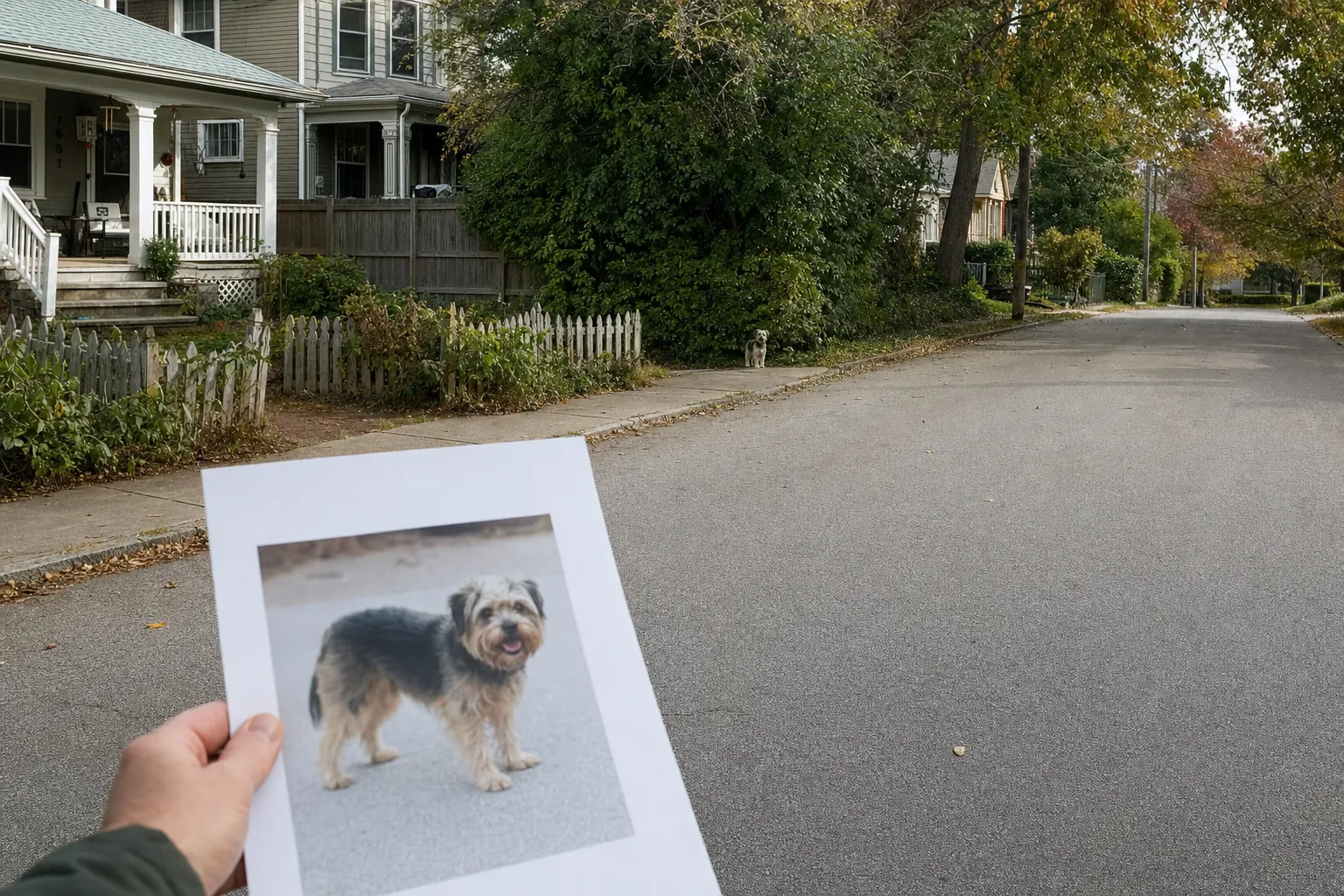
“Please keep an eye out” is kind, but it often leaves people unsure what to do. Give neighbors a current photo, your dog’s name, a short description, the last known location, and one reliable way to reach you. If your dog is timid, say not to chase, corner, or call a crowd. Ask people to report the precise time, place, direction of travel, and whether the dog appeared calm, injured, frightened, or interested in food.
Start with the homes, businesses, and walkers closest to the last known point. Ask permission to check a yard, shed area, porch, or side passage if it makes sense. A respectful request for access is more useful than a broad request for vigilance. Keep a note of which places were checked, which people were not home, and which spaces still need a second look.
Then widen the notice. Create a lost-pet listing with a recent photo, call local shelters and veterinary clinics, notify animal control, and contact your microchip company. The Humane Society’s guidance for a missing pet is a useful companion for building that notification work without losing track of the close search. Your local shelter may have its own reporting process, so check its guidance and keep your report updated.
Be careful with unverified messages. A real sighting should give you enough detail to act: where, when, and what the person observed. Ask anyone claiming to have your dog for a current photo or a detail that is not public in your post. That protects your time and keeps the search team focused on leads that can be checked.
4. Use sightings to choose the next action
A sighting is not just a pin on a map. It tells you something about what to do next. If a dog was seen resting near a familiar home, return quietly and ask the resident whether they can watch from a distance. If a dog was seen crossing a road, note the direction, nearby cover, and the time of day. If several people see the dog near the same place, that area may be a better candidate for a calm recovery plan than for a larger search party.
Resist the urge to chase. A dog who is in flight mode may not recognize or respond to their usual name the way they would at home. The Missing Animal Response Network’s lost-dog behavior guidance explains why fearful dogs can react differently from the dogs their guardians know. If you see your dog, slow your movement, turn your body slightly sideways, avoid reaching straight toward them, and use a soft familiar voice.
Put down high-value food at a safe distance if it will help, then give the dog room to decide. A seated or crouched position can feel less threatening than standing over them. Ask bystanders to step back, quiet their dogs, and stop moving in. The goal is to make the next moment easier for your dog, not to win a race to them.
If a dog is near fast traffic, water, a rail line, or another immediate danger, do not improvise a pursuit. Contact local animal control, emergency services, or an experienced rescue professional. A recovery attempt needs to reduce risk, not push the dog farther into it.
5. Build a simple search log that a helper can use
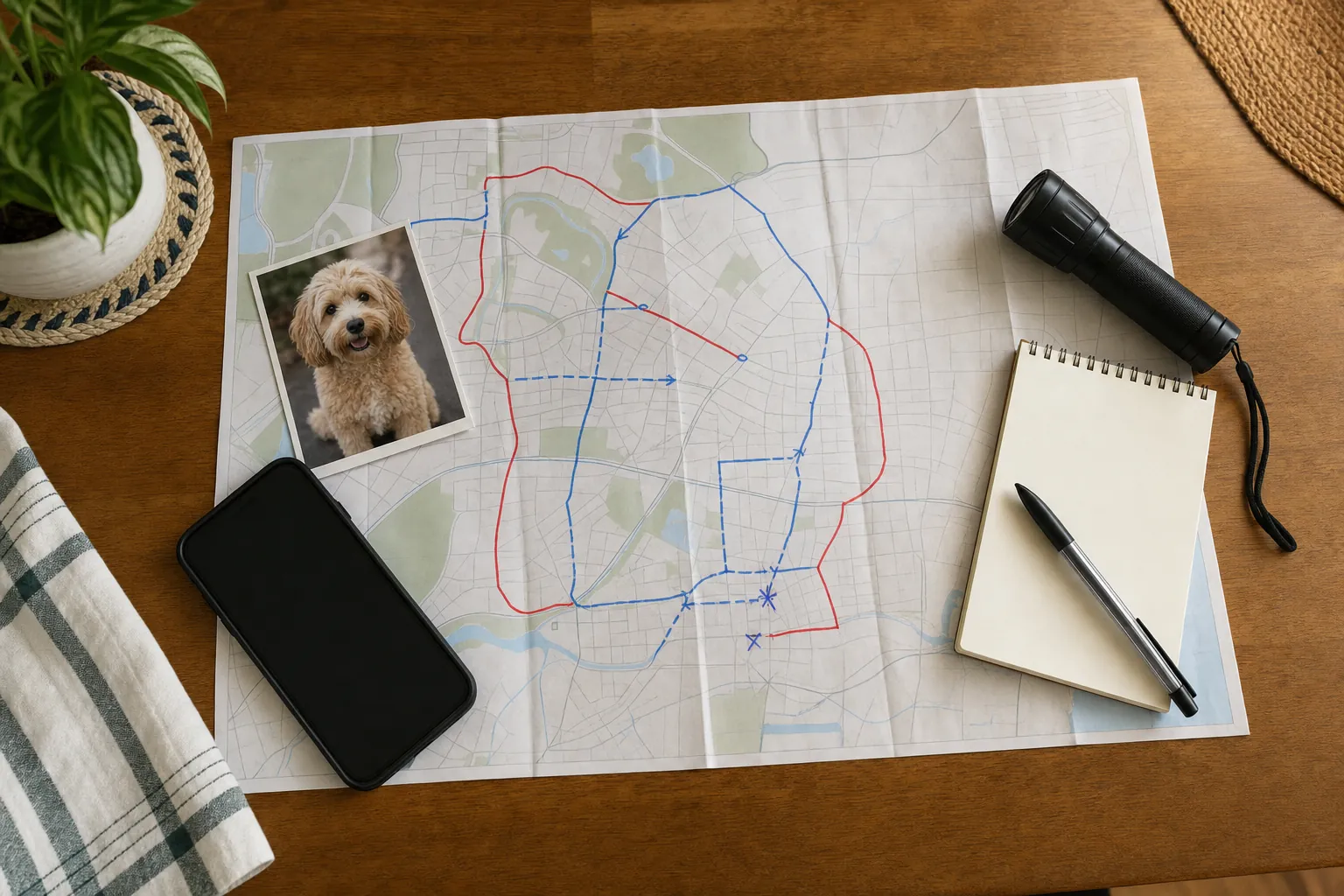
A search log turns a flood of calls and messages into information you can act on. Keep the format simple: time, location, source, what was seen, what you did next, and whether the report was confirmed. Mark checks, sightings, and follow-ups differently so you can see which areas have been searched carefully and which areas need attention.
Choose one person to maintain the primary log if you have a small support team. Another person can take shelter and veterinary calls. Someone else can post or update a local notice. Clear jobs are calmer than several people doing the same task at once, and they make it easier to respond when a new sighting arrives.
Revisit the plan at regular intervals. Look for patterns in the time of day, direction of travel, nearby food sources, familiar routes, or places where your dog could be resting. A trail camera, placed with permission and checked responsibly, can help confirm whether a dog is returning to an area. Use each tool for a clear reason, then adjust when it gives you new information.
Keep practical details with the log too: your dog’s microchip number, a current photo, medication needs, and the contact details for the people helping. Those are the facts you may need quickly if a shelter, veterinarian, or good neighbor calls.
Make a short briefing for anyone who joins the search later. Include a clear photo, the last confirmed sighting, the areas already checked, and the one action you need from them next. A person who knows not to chase, where to look, and how to report a sighting can be more helpful than someone covering a large area without a plan.
Refresh public posts when you have a meaningful update, rather than adding a new message every hour. A new photo, a changed last-seen location, or a request not to approach can help people respond appropriately. Remove outdated notices once the search ends so your community has accurate information and no one keeps sharing an old alert.
6. Create a recovery plan when the dog keeps moving
Some dogs come close but will not allow a person to approach. This is common enough that it deserves a different plan. Instead of sending more people after the dog, reduce the pressure around the last confirmed location. Ask nearby residents not to leave food in several competing places, not to chase, and not to post a crowd around a sighting.
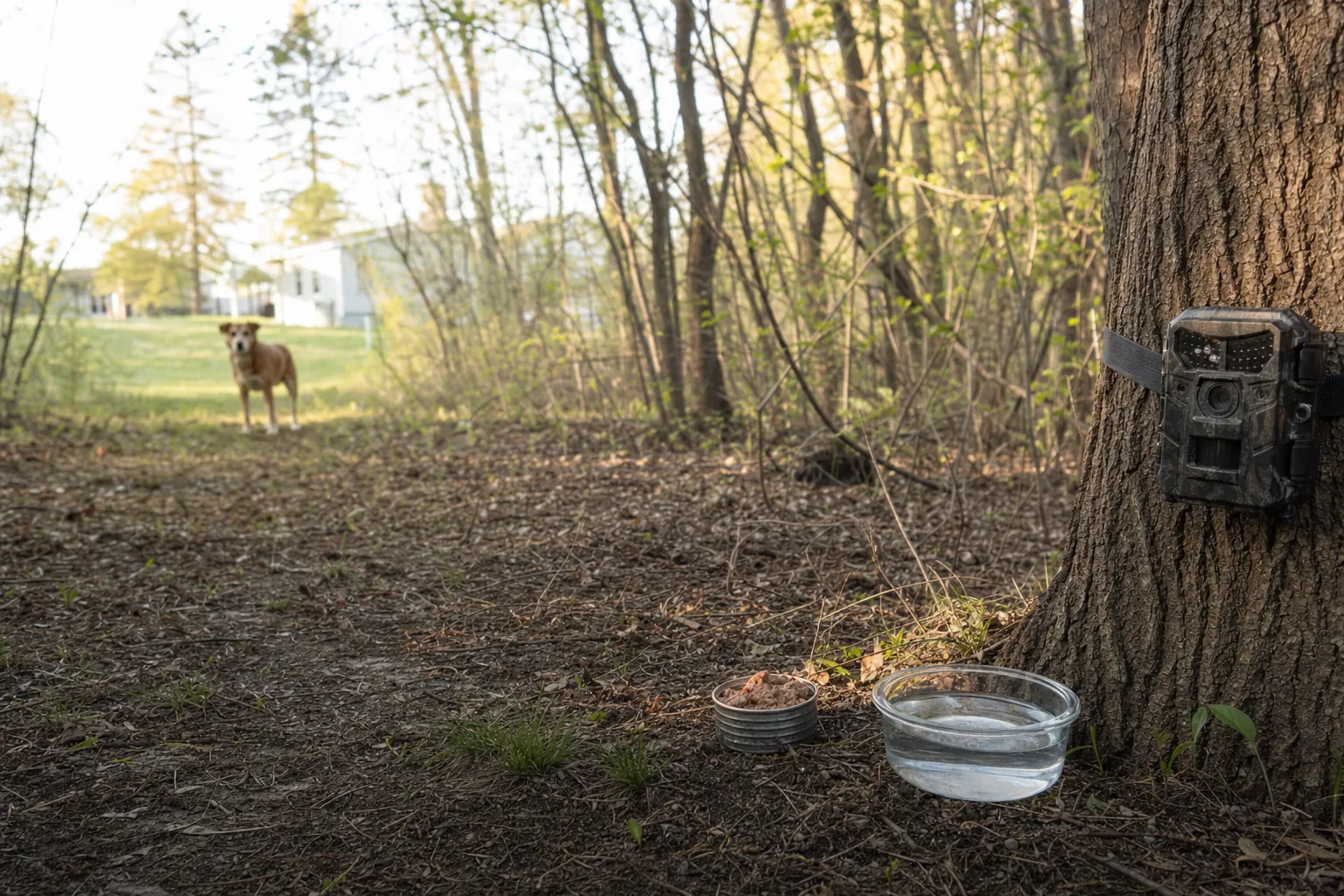
Choose one safe, permission-based location for food, water, and a camera if the circumstances fit. Keep it away from traffic and check it responsibly. Use familiar smells carefully, such as an unwashed shirt or bedding, but do not create a cluttered scene that makes it difficult to tell what is attracting the dog. If the dog returns reliably to one place, contact a local rescue or experienced lost-dog recovery volunteer about the safest next step.
Humane traps can help in the right circumstances, but they need supervision, weather protection, permission from the property owner, and a plan for every animal that might enter. Do not leave a trap unattended or treat it as a substitute for a sighting-based recovery plan. Local shelters and rescues can often advise on safe setup or refer you to someone with experience.
Keep your language public-facing and useful. “Please do not chase. Call or text with the exact location and time” gives your community a simple action. It also helps prevent well-meaning people from accidentally turning a cautious dog into a dog on the run.
Try to preserve a quiet path for the dog to move through. Parked cars, a familiar yard, or the edge of a tree line may offer cover that feels safer than an open group of people. You can ask a neighbor to watch from inside, leave a gate open only with permission and clear supervision, or wait patiently at a distance. Small adjustments like these can give a dog an option other than running farther away.
7. When additional intuitive support may be helpful
Practical searching, shelters, local authorities, and veterinary care come first. If those actions are already underway and you want an additional layer of structured support, Lindsey’s Lost Pet Location Protocol is designed for active missing-pet cases. It begins with Animal Communication Reiki and a completed written report before map information is reviewed, giving guardians a clear record of the process.
This is not live tracking, ongoing monitoring, or a promise of recovery. It is supportive guidance for people who want a documented process alongside the real-world search already in motion. The lost-pet support overview explains what the service includes, what it does not include, and what Lindsey reviews before accepting a request.
If your dog is missing and the service feels appropriate for your situation, you can request support directly from Lindsey. Bring the same practical information you are using for the search, including the last known place and time, confirmed sightings, current photos, and the steps already taken.
Keep this close
Your first lost-dog search steps
- Check the last known place, then search the close area carefully.
- Give neighbors a current photo and specific instructions for reporting a sighting.
- Notify shelters, veterinary clinics, animal control, and your microchip company.
- Use exact times and locations to decide where the search goes next.
- Do not chase a frightened dog. Create space, lower pressure, and ask for help when recovery becomes unsafe.
Frequently asked questions
Questions pet guardians often ask
What should I do first when my dog is missing?
Start with a calm check of your home, yard, vehicle, and the exact place your dog was last seen. Then begin a close, organized search while you alert nearby people and local animal-care resources. Record confirmed sightings and expand the search based on real information rather than panic.
What should I do if my dog is lost at night?
Start close with a flashlight, a charged phone, a recent photo, and a calm plan for staying safe. Check familiar hiding places and quiet cover near the last known location, then ask nearby people to report exact sightings instead of chasing or calling a crowd toward a frightened dog.
Should I chase my dog if I see them?
Usually, no. A frightened or overwhelmed dog may run farther when chased, even if they know you. Turn your body sideways, soften your voice, avoid direct eye contact, and use familiar food or a calm helper to create a safer approach. If the dog is near traffic or another immediate danger, call local animal control or emergency services.
How far can a lost dog travel?
The distance varies widely with the dog, the place they went missing, weather, traffic, access to food or shelter, and whether they are frightened or social. Start close and expand with verified sightings. A detailed search log is more useful than guessing a distance.
Who should I notify about a missing dog?
Contact local shelters, animal control, veterinary clinics, nearby rescues, and your microchip company. Create a clear lost-pet listing, tell nearby neighbors, and use local community channels with a recent photo and a reliable contact method.
Can intuitive support replace a physical lost-dog search?
No. Intuitive support does not replace a careful physical search, shelters, veterinarians, animal control, search teams, or emergency services. Lindsey’s Lost Pet Location Protocol is designed as supportive guidance for guardians who are already taking practical action.
Related posts
Continue your search planning
Lost Pet Searches
How to Find a Lost Cat: A Practical Search Plan
A calm, practical guide to searching close, asking for access, using humane tools, and building a plan when your cat is missing.
Read the guide →
Lost Pet Searches
How to Find a Lost Cat at Night: A Calm Plan
A quiet, practical nighttime search plan for checking close hiding places, gathering sightings, and helping a missing cat feel safe enough to return.
Read the guide →
Lost Pet Searches
How Far Do Lost Cats Travel? Start Close First
A practical way to set a search radius for a missing cat, use behavior instead of guesswork, and expand only when real sightings point the way.
Read the guide →