
Finding a dog who seems alone can make you want to act fast. The kindest response is usually calmer: keep the dog safe, avoid adding pressure, gather the few details that can help reunite them with their person, and involve the right local resource. A loose dog may be friendly, frightened, injured, looking for home, or simply taking a brief unsupervised adventure. You do not need to solve everything at once to make a meaningful difference.
1. Pause and make the immediate area safer
Start by looking at the situation before you approach. Is the dog near traffic, an open gate, a busy parking lot, water, another dog, or a crowd? Your first job is not to catch the dog at any cost. It is to reduce the chance that the next few minutes become more dangerous for either of you.
If it is safe, ask other people to give the dog space, slow cars, and keep their own dogs back. Do not run after a loose dog, call from several directions, or let people surround them. A dog who is already uncertain may read that pressure as a reason to run. The Missing Animal Response Network’s lost-dog guidance explains why a frightened dog may behave very differently from the dog their guardian knows at home.
Stay aware of your own limits. If the dog is showing signs of fear or distress, is near moving traffic, appears injured, or could bite when cornered, do not force an approach. Note the exact location, the time, the direction the dog went, and any visible identifying features. Then call local animal control, emergency services, or a nearby shelter for direction. A precise, calm report gives responders something they can use.
2. Let the dog choose a calmer approach
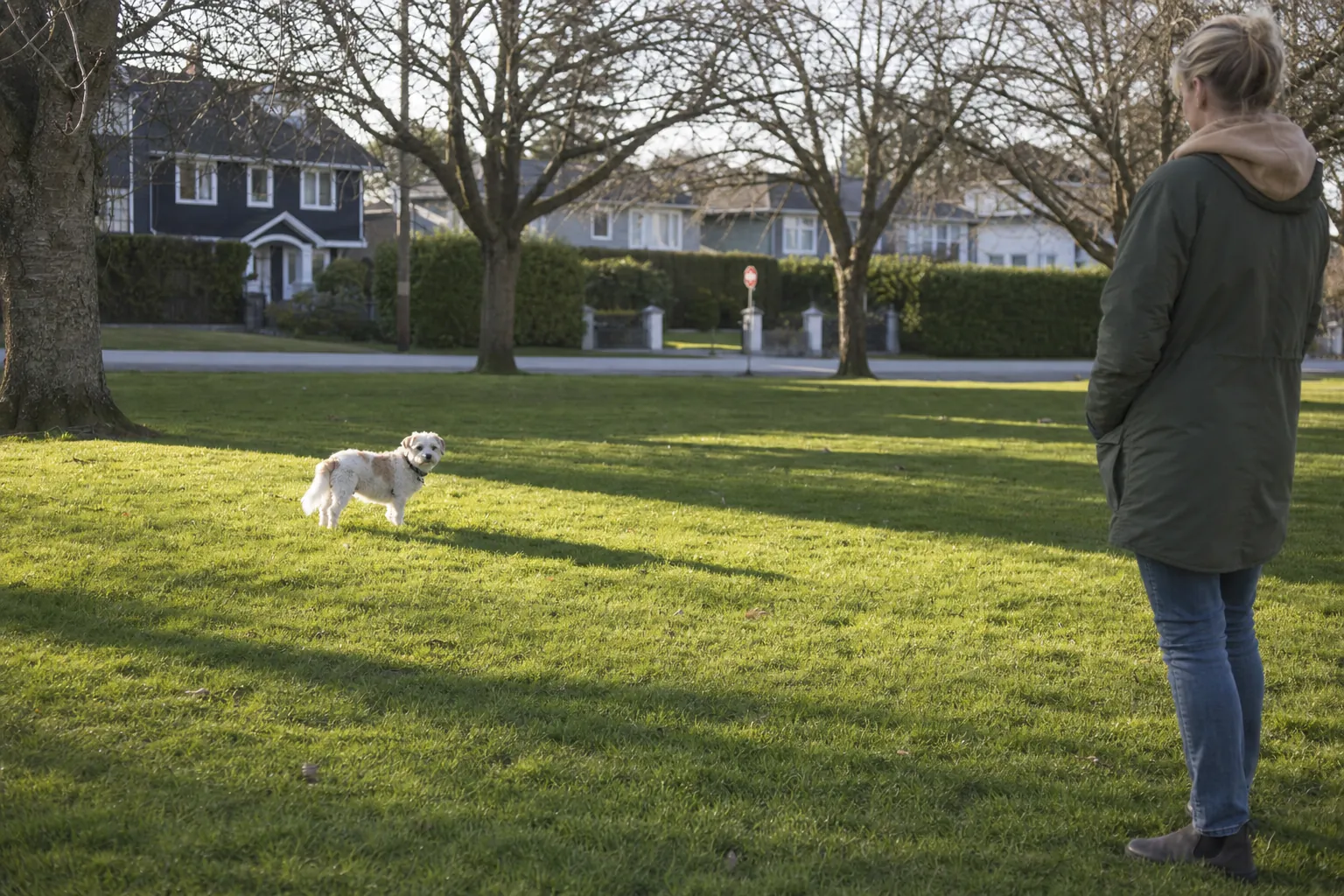
If the dog is in a safer area and seems open to you, move slowly. Turn your body a little sideways instead of facing them head-on. Avoid reaching over their head or staring into their eyes. Use a quiet, ordinary voice. You can lower yourself by sitting or crouching at a distance, but do not block the dog’s path or make them feel trapped.
Food can help, but it should not become a chase. Place a small amount of something appealing on the ground, step back, and let the dog decide whether to come closer. A leash, slip lead, or even a length of soft rope can be useful only if you can use it without lunging, grabbing, or putting your hands near a frightened dog’s face. Never put yourself at risk to secure a dog who is clearly trying to get away.
Look for the difference between a dog who wants company and one who needs more distance. A wagging tail alone does not tell the whole story. Stiff posture, pinned ears, repeated backing away, growling, snapping, or darting are signs to stop pressing forward. A neutral observer can be more helpful than a determined rescuer when the dog needs time to settle.
3. Check for a tag when the dog is safely close
Once the dog is calm enough to be near you, look for a collar and identification tag without pulling or restraining them abruptly. A current phone number on a tag is often the fastest path home. Call or text it, say where and when you found the dog, and agree on a safe way to confirm ownership before meeting.
A missing tag does not mean the dog has no guardian. Collars can slip off, tags can be outdated, and many loved dogs have no visible identification at all. If you can safely contain the dog, a local veterinary clinic, shelter, or animal-control agency may be able to scan for a microchip. The Petco Love Lost recovery resource also offers a photo-based lost-and-found tool that can help connect a found dog with an active report.
Take a few clear photos if you can do so without upsetting the dog. Include the dog’s face, coat markings, collar, and a wider image that shows size and condition. Keep details such as an unusual collar mark, a scar, or a private location detail off public posts when possible. Those details can help a guardian confirm that the dog is truly theirs.
4. Contact the local places a guardian is likely to check
Report the dog promptly to the local animal-control agency or shelter that serves the place where the dog was found. Ask what their intake process is, whether they can scan for a microchip, and whether they recommend a short safe hold. Rules about found animals, holding periods, and private foster care vary by city and county, so local guidance matters here.
Call nearby veterinary clinics and animal hospitals when that is practical, especially if the dog looks injured, ill, overheated, exhausted, or has an obvious medical need. A veterinary team can assess urgent problems and may recognize a dog from a recent lost-pet notice. Do not delay urgent medical help while trying to identify a guardian yourself.
Keep your message factual and easy to verify: found dog, general area, date and time, basic description, whether the dog is safe, and whom to contact. Avoid publishing every marking or accessory. Someone looking for their dog should be able to supply details that match what you have not made public. This protects both the dog and the rightful guardian.

5. Share a careful found-dog notice
After reporting the dog locally, post a clear notice in the channels people in that area actually use: neighborhood groups, local lost-pet pages, shelter listings, veterinary offices, and community bulletin boards where posting is allowed. Use one good photo, the general area, the date, and a contact method you can monitor. Keep the location broad enough that a guardian can recognize the area without inviting strangers to converge on the dog.
Say whether the dog is secured or still loose. If the dog is still moving, include the last confirmed sighting, time, direction, and a request not to chase. This is one of the most useful ways a bystander can help. A calm sighting with a precise location is often more valuable than several people trying to corner a frightened dog.
Do not assume every dog you see nearby is the same dog. Ask for a current photo or a specific detail when someone contacts you. Save messages and note the time of any credible report. If a guardian is searching actively, this information may help them make the next thoughtful decision instead of covering the same ground twice.
6. Keep the dog safely contained, only when you can do so responsibly
If you have safely secured the dog and local guidance allows you to hold them briefly, choose a quiet place away from children, resident pets, open doors, and food bowls. Use a separate room, a secure fenced area, or another contained space. Provide water, but do not assume the dog can safely share food, toys, space, or physical contact with your animals.
Containment is not a promise that you must solve the whole situation alone. A shelter or animal-control officer may be the better choice, especially when the dog is stressed, injured, not house-trained, reactive around other animals, or too large for you to handle. The right decision is the one that keeps the dog secure and gives the guardian the clearest possible path to find them.
Write down the essentials while they are fresh: where you found the dog, what time, who saw them, any calls you made, identifying details, the places you reported them, and every person who contacts you. This small record prevents confusion later and makes a handoff to a shelter, clinic, or guardian much easier.

7. Reunite the dog carefully
When someone says the dog is theirs, ask them to show clear proof before meeting. Useful confirmation can include current photos, veterinary records, registration information, a microchip match, a distinctive collar detail, or a description of something you did not include in the public notice. A worried guardian should understand why you are checking. Careful verification protects everyone involved.
Meet in a safe public place or work through the shelter or animal-control process when possible. Do not post your home address publicly or invite an unknown person inside. If the dog is in a shelter’s care, let the staff follow their established release process. It is designed to document the reunion and reduce the chance of a wrong handoff.
Once the dog is safely home, update the reports and posts you made. A short “reunited” update stops people from chasing an outdated sighting and helps local groups keep their information useful. If you made a flyer or community-board notice, remove it promptly. It is a small courtesy that also keeps the community ready to notice the next dog who truly needs help.
When a missing-dog search needs more support
A found-dog notice and a calm observation can change the course of a family’s search. For guardians who are already working with shelters, veterinarians, local resources, and a practical search plan, Lindsey’s Lost Pet Location Protocol offers additional structured intuitive support. It begins with Animal Communication Reiki and a written report completed before map information is reviewed.
The protocol is not live tracking, a substitute for physical searching, or a guarantee that a dog will be recovered. It is a documented, supportive process for an active search. Guardians can also use Lindsey’s lost-dog search guide and lost-dog flyer template to keep local communication clear and useful during the first days.
Keep this close
Found-dog checklist
- Make the immediate area safer and do not chase or crowd the dog.
- Move slowly, give the dog space, and approach only when it is safe.
- Check for a tag and arrange a microchip scan when the dog is secured.
- Report the dog to local animal control, shelters, and nearby clinics.
- Share a careful notice, keep private details private, and verify ownership before a reunion.
Frequently asked questions
Questions people often ask
What should I do first if I find a lost dog?
First, protect your own safety and the dog’s safety. Slow down, keep traffic and other dogs away when possible, and avoid chasing or grabbing a frightened dog. If the dog is approachable and you can safely contain them, check for a tag and call the number. If not, report the exact location to local animal control or a shelter.
Can I keep a found dog overnight?
Rules differ by location, so contact your local animal control agency or shelter before deciding. A short-term, safe hold may be possible in some places, but reporting the dog promptly and checking for a microchip are important because a guardian may already be actively searching.
Should I take a found dog to a vet for a microchip scan?
Yes, if the dog is safely contained and the clinic can see them. Veterinary clinics, shelters, and many animal-control agencies can scan for a microchip. A scan is quick, but a dog without a visible chip or tag still needs a local lost-and-found report.
What if the dog is scared, injured, or near traffic?
Do not take risks that could make the dog bolt or put you in danger. Keep a safe distance, note the exact location and direction of travel, and call local animal control, emergency services, or another qualified local resource. A calm report can be far more helpful than a rushed attempt to catch the dog.
How can I avoid helping the wrong person claim a found dog?
Do not hand a dog over based only on a general description. Ask the claimant to provide photos, veterinary records, a microchip match, or details that were not publicly shared. Follow the local shelter or animal-control process when one is available.
Related posts
Support a thoughtful search
Lost Pet Searches
How to Find a Lost Dog at Night: A Practical Search Plan
A steady, practical nighttime search plan for organizing the first hours, responding safely to sightings, and bringing a missing dog home.
Read the guide →
Lost Pet Searches
Lost Dog Flyer Template: What to Include
A copy-ready lost-dog flyer template, plus practical tips for getting useful sightings and responding safely when a dog is frightened.
Read the guide →