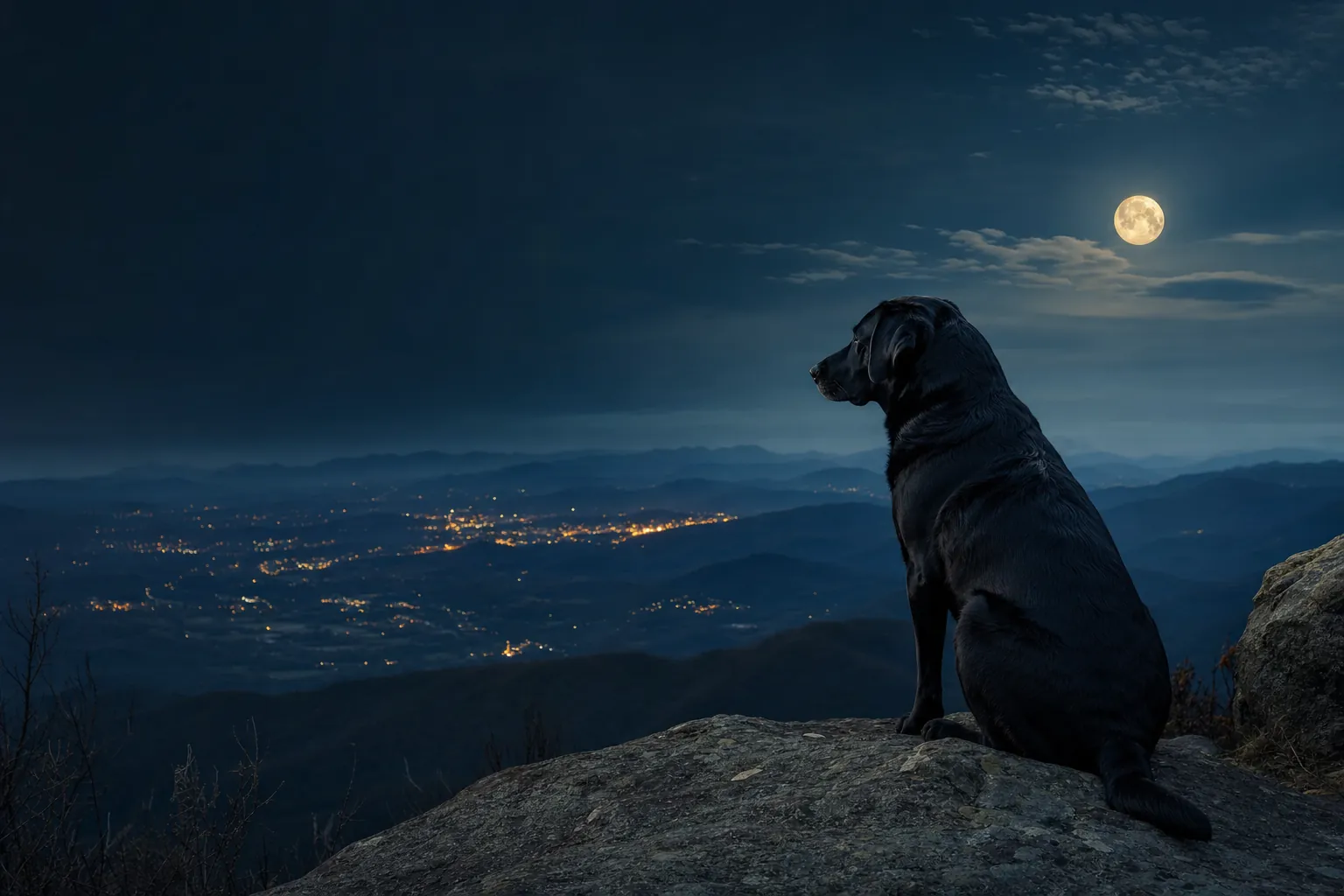
Seeing your dog loose but unwilling to come close can feel unbearable. The instinct to run toward them is strong. In many situations, though, slowing down is the kindest and safest thing you can do. A frightened dog may react to motion, noise, eye contact, and a crowd as pressure, even when the people nearby are familiar and loving.
This guide is for the moment you have a sighting. It is not a substitute for local animal-control guidance, veterinary care, or emergency services. If there is traffic, injury, water, severe weather, aggression, or any immediate danger, protect people first and call qualified local help.
Start with one rule: do not chase
A scared dog needs an exit route more than a fast approach. Running after them, moving straight toward them, shouting their name, or sending several people to close in can make the dog move farther away or toward a more dangerous place. The practical goal is not to win a footrace. It is to reduce pressure, keep the dog in a safer area, and gather information that makes the next decision better.
Petco Love Lost’s guidance for shy lost dogs also emphasizes slow movement, calm behavior, avoiding direct eye contact, and stepping back when a dog is over threshold. Those choices may feel passive, but they can keep a dog from being pushed farther from home.
Read the situation before you move
From a safe distance, look at the dog’s surroundings and body language. A dog that is loose-bodied, eating, sniffing, or choosing to move closer may be able to tolerate a quiet invitation. A dog that is tucked low, scanning, pacing, freezing, growling, barking, lunging, or looking for an escape route needs more space. You do not need to diagnose the dog’s feelings. You only need to notice whether your presence is making the dog retreat or become more worried.
Do not try to handle a dog that looks injured, trapped, defensive, sick, or panicked. Do not enter traffic, private property, water, rail areas, construction zones, or other unsafe places to get closer. Make a note of the exact location, nearby landmark, direction of travel, and time. A photo or short video taken from a safe distance can help the guardian or local responders confirm the sighting.
Use low-pressure body language
If the area is safe and the dog has not shown defensive behavior, stop advancing. Turn your body slightly sideways rather than facing the dog head-on. Keep your hands low, avoid staring, and use a quiet voice once rather than repeated calling. Sit or crouch only if it is safe for you to do so and you can still step away easily. Let the dog choose whether to close the distance.
You can toss a few small, appealing treats to the side of the dog, then remain still. Do not throw food at the dog, hold food out from your hand, or use it to pull them into a corner. If the dog does not eat, backs away, or becomes tenser, take that as useful information: the dog needs more room, not more effort.
Keep the recovery team small and coordinated
When a dog is seen in a neighborhood, people often want to help at once. That generosity can become a problem if everyone follows the dog, calls from a different direction, or starts sharing sightings without a plan. Choose one person to collect reports and one person to communicate the same calm instruction to neighbors. Everyone else can support from a distance by watching entrances and exits, checking safe places with permission, or preparing a clear flyer and alert.
Give each helper a role that does not put them in the dog’s path. A person near the last confirmed sighting can observe without approaching. Another can call local shelters or veterinary offices. Someone else can keep a written timeline. If the dog crosses a street, a helper may be able to alert drivers or contact authorities, but no one should run into traffic or try to create a human barrier around the dog. A loose dog needs fewer surprises, not more bodies.
Use familiar things carefully
It is natural to reach for a leash, favorite toy, food bag, or familiar blanket. These objects can be useful if they help create a quiet routine, but they are not a promise that the dog will recognize you or walk directly over. Keep a leash ready without swinging it toward the dog. If the dog approaches and remains relaxed, let them sniff before attempting any contact. A sudden reach for a collar can turn a hopeful moment into another retreat.
If your dog has a known recall cue, say it once in the same gentle way you use at home. Then pause. Repeating a command, raising your voice, or pleading can add noise and urgency to an already confusing moment. Some dogs will follow a guardian who slowly walks away from them toward a quiet, familiar place. Others may need a longer, more structured plan. Watch the dog’s response instead of assuming one technique will work for every dog.
Prepare for the moment contact becomes possible
When the dog chooses to come closer, keep the same slow pace. Let the dog investigate rather than reaching over their head or stepping into their path. A soft loop lead, slip lead, or regular leash can be useful only if you know how to use it safely and the dog is relaxed enough to accept it. If you have any doubt, do not improvise. A startled dog can slip out of a collar, bite in fear, or bolt into a more dangerous area in seconds.
Once a dog is contained, move them somewhere quiet and away from other animals. Check for a tag only if it is safe. A local veterinary office, shelter, or animal-control agency may be able to scan for a microchip and advise you on the correct lost-and-found process. If the dog is not yours, avoid assuming that a familiar-looking dog is abandoned. A calm report and a safe handoff give a guardian the best chance of being reunited.
Turn a sighting into a useful report
A good sighting report gives a guardian or responder something they can act on. Share the time, exact location, direction of travel, visible landmarks, whether the dog ate, whether they were wearing a collar, and what changed when people got closer. Add a photo or video only when it was safe to get one. Avoid posting a broad public invitation for people to chase after the dog.
If this is your own dog, give nearby helpers a simple script: “Please do not chase, call out, or approach. If you see this dog, send the time, exact location, direction of travel, and a photo if safe.” Pair that message with the practical steps in the lost dog flyer guide so the information people share is consistent. A small, informed group is usually more useful than a crowd acting on different instincts.
Make each update specific
Vague reports create more searching and less clarity. “I saw a dog near the park” is difficult to use. “At 7:15 p.m., a tan dog with a blue collar moved south along the east fence of Oak Park, then entered the brush behind the tennis courts” gives the search a starting point. Ask people to note a landmark, the direction the dog was moving, the dog’s pace, and whether the dog was alone or interacting with another person or animal.
Separate confirmed information from hopeful guesses. Keep a simple record with time, location, source, photo or video, and behavior. If several sightings describe the same movement, that may help local professionals decide where a monitored feeding station or camera could be useful. If a report is uncertain, keep it marked as uncertain rather than letting it pull the whole search in a new direction.
Protect the dog’s location from too much attention
Public posts can be valuable, especially when they reach nearby neighbors quickly. They can also bring people who mean well but do not know the dog’s fear level. When a dog is repeatedly seen in one small area, share the most precise details privately with the people coordinating the search and keep public wording simple: do not chase, do not call, report sightings immediately. This is not about withholding help. It is about making the help useful.
Ask anyone who shares a possible sighting to send the original image or video, not a cropped screenshot without context. Check timestamps and landmarks before treating a post as current. A photo from hours earlier can still be helpful, but it should not send a search party away from a fresher confirmed report. Careful communication lets a search stay calm and evidence-led when emotions are understandably high.
Know when to pause and bring in help
Sometimes the right next move is no move at all. If a dog is repeatedly retreating, stop trying to close the gap. Ask local animal control, a shelter, a veterinarian, or an experienced lost-pet recovery group about a monitored feeding station, camera, humane capture equipment, or a safe containment plan. Equipment should be used only with knowledgeable local guidance and active monitoring. An unattended trap, a rush of strangers, or an improvised grab can create a new emergency.
Current behavior guidance on catching a scared dog similarly advises people to watch the dog’s responses, avoid fast approaches and chasing, and contact local animal care when they cannot safely handle the situation. If a dog is near traffic or another immediate hazard, call emergency services or animal control rather than trying to force a recovery yourself.
Do not let a near miss become a setback
It is hard to step back after the dog has been within sight. Still, a dog that walks away is not a failed recovery. It is information about what felt safe to that dog at that moment. Record where the dog went, avoid following directly, and let the coordinators decide whether to wait, observe from farther away, or change the plan. Quiet patience can preserve a familiar area for the next sighting.
After a close encounter, remind helpers that there is no benefit to replaying what someone “should have done.” Fearful dogs can react differently from minute to minute. The best next step is a calm one: update the sighting log, reduce pressure in the area, and ask experienced local people for guidance when a capture plan is needed.
Support the search without replacing it
An active lost-dog search needs practical action first: confirmed sightings, local resources, safe handling, and a record of what is happening on the ground. Lindsey’s Lost Pet Location Protocol is supportive intuitive work for guardians who are already using those practical steps. It does not replace shelters, animal control, veterinarians, trained recovery teams, or emergency services, and it does not provide real-time tracking or guaranteed outcomes.
If you have found a dog that may be separated from their guardian, the companion guide What to Do If You Find a Lost Dog covers identification, reporting, and safe reunification. If you are looking for your own dog, the nighttime lost-dog search plan can help you organize the first hours after a sighting has ended.
A calm response checklist
- Keep yourself, other people, and the dog away from immediate hazards.
- Do not chase, surround, corner, grab, or repeatedly call to the dog.
- Stay at a safe distance and use quiet, sideways body language.
- Record the exact location, time, direction of travel, and behavior.
- Share a clear “do not chase” message with helpers.
- Call trained local help when the dog is unsafe to approach or the setting is dangerous.
Frequently asked questions
Should I chase my scared dog if I see them?
No. Chasing can add pressure and drive a frightened dog farther away. Stop at a safe distance, soften your body language, and focus on an accurate sighting report or a calm recovery plan instead.
What should I do if a loose dog is near traffic?
Do not run toward, surround, or grab the dog. Move people and pets away if you can do so safely, note the exact location and direction of travel, and contact animal control, police, or emergency services when there is immediate danger.
Can I use treats to catch a scared lost dog?
You can toss small, tempting treats away from your body while staying still and giving the dog room. Do not use food to draw a dog into a corner or reach toward them while they eat. If the dog remains worried, back away and let trained local help guide the next step.
What should I tell someone who spots my lost dog?
Ask for the exact time, location, direction of travel, a photo or video when safe, and a description of the dog’s behavior. Ask them not to chase, call repeatedly, gather a group, or post a vague location that could attract well-meaning pursuers.
When should I call for professional help?
Call for help immediately when the dog is injured, defensive, near traffic, trapped, in severe weather, or too fearful to approach. A local shelter, animal control agency, veterinarian, or experienced lost-pet recovery group can advise on the safest next step.
Related posts
Lost Pet Searches
How to Find a Lost Dog at Night: A Practical Search Plan
A steady, practical nighttime search plan for organizing the first hours, responding safely to sightings, and bringing a missing dog home.
Read the guide →
Lost Pet Searches
Lost Dog Flyer Template: What to Include
A copy-ready lost-dog flyer template, plus practical tips for getting useful sightings and responding safely when a dog is frightened.
Read the guide →
Lost Pet Searches
What to Do If You Find a Lost Dog
A calm, safety-first guide to helping a found dog without adding fear, risk, or confusion to the path home.
Read the guide →