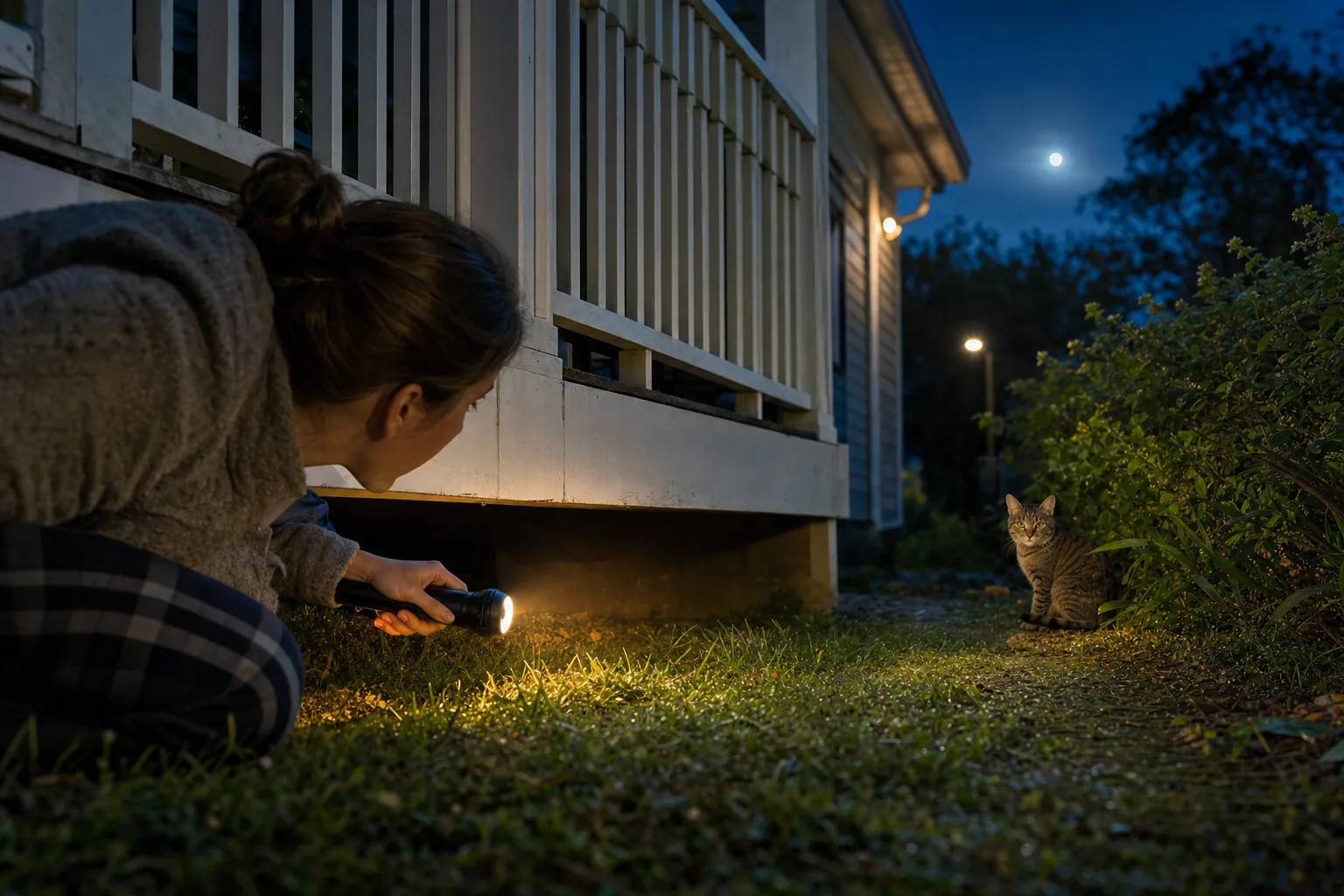
When a cat is missing, night can feel like the hardest time to wait. It can also be a useful time to search with less noise, fewer cars, and more attention to the close hiding places a frightened cat may use. The goal is not to stay out all night or cover every block. It is to make a calm, repeatable plan that gives you useful information while keeping both you and your cat safe.
1. Start with the closest hiding places
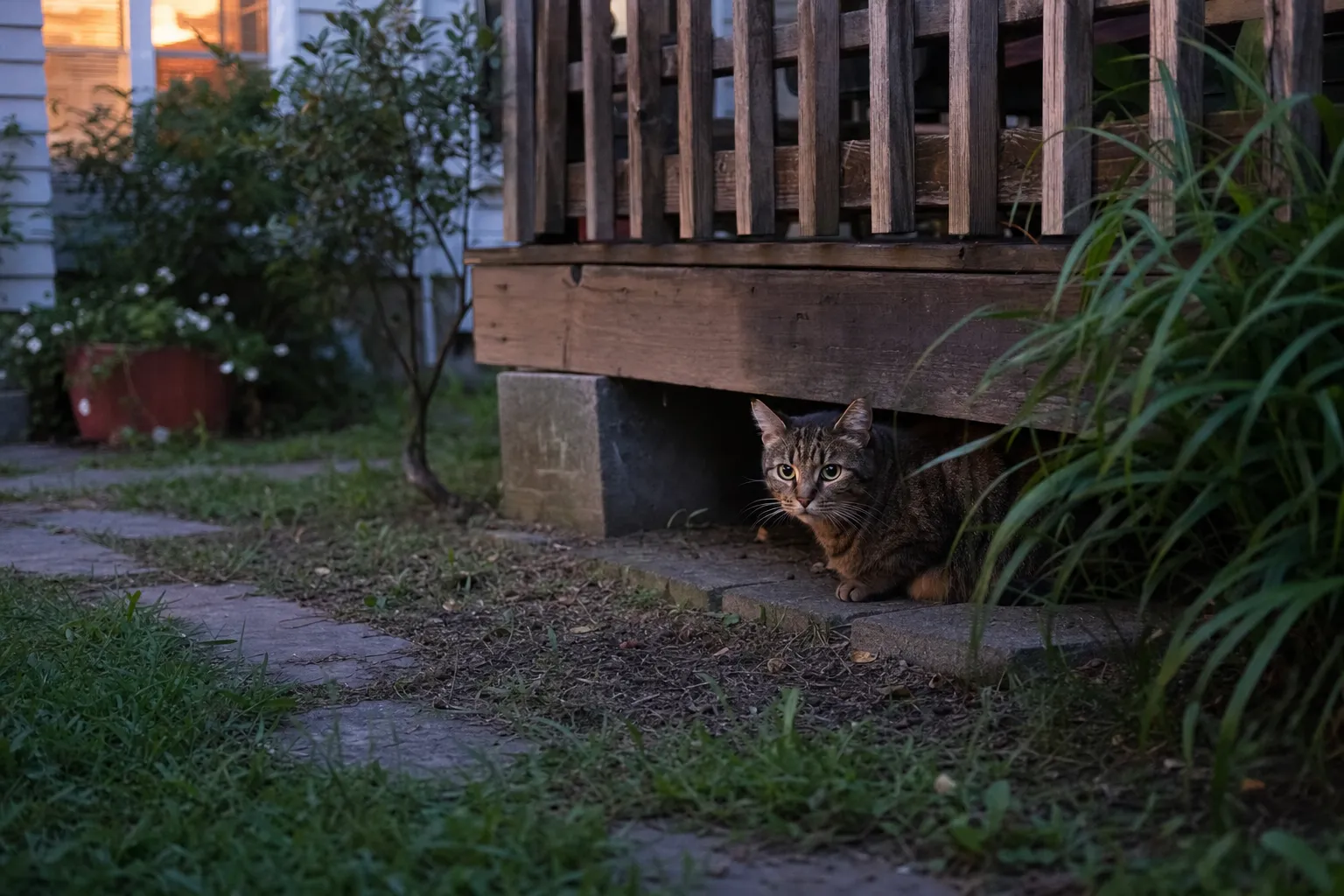
Begin where your cat was last seen, not with the widest possible search area. Check your own home again first, including closets, furniture, a garage, basement, shed, vehicle, and any room that may have been closed. Then search the immediate outside area slowly. Look beneath porches and decks, behind bins, along fence lines, under shrubs, beside foundations, and around parked cars.
Use a flashlight held low and sweep the beam slowly. A direct light can help you notice reflective eyes, but do not rush past quiet spaces because you are looking for a shine. Pause, crouch when it is safe, and look into the dark areas a cat could reach. A frightened indoor cat may stay silent and tucked into a place that is only a few feet away.
Bring a recent photo, a charged phone, a flashlight with fresh batteries, and a small notebook or notes app. The Pet FBI lost-cat checklist is a useful companion for keeping the wider response organized while you work through the close search. Write down the places you checked and the time, especially if there are several people helping.
Do not assume your cat will come when called. Stress can change a familiar cat’s behavior. Use their name and a sound they know, then give the quiet a chance to work. A soft call, a pause, and another careful look often gives you more information than walking quickly through the same area while calling continuously.

2. Make the night search quiet and deliberate
A nighttime search works best when it reduces pressure. Ask helpers to walk, not run. Keep voices low. Avoid shining lights directly into windows or yards where people are sleeping. If your cat is hiding nearby, a sudden group, loud calling, or a person moving quickly toward them can make them retreat deeper into cover.
Choose one small area for each pass. One person can check beneath a porch while another walks the edge of the next driveway. Move in a simple pattern so you know what has been covered. When you reach the end of a block, stop and listen for a moment before moving on. You may hear a meow, rustle, collar bell, or a neighbor’s dog reacting to movement.
Ask nearby neighbors before entering a yard or checking around a shed, garage, or side passage. Respecting property boundaries matters, and a neighbor who understands what you are looking for may be willing to check their own enclosed spaces. Give them a clear photo and ask them to report the exact place, time, and direction if they see your cat.
Wear shoes with good traction, carry a phone, and avoid searching alone near traffic, wooded areas, water, or unfamiliar property. Do not climb, crawl into unsafe spaces, or reach toward an animal you cannot see clearly. If your cat is trapped, injured, near a road, or in any immediate danger, contact local animal services, a veterinarian, or emergency help instead of trying to handle the situation by yourself.

3. Respond to a sighting without turning it into a chase
If you see your cat, take a breath before moving. A scared cat may recognize you and still run if they feel cornered. Lower your body if it is safe, turn slightly sideways, and use a familiar calm voice. Put a favorite food down within reach, then give your cat a little space to decide whether to approach.
Do not send a crowd toward a sighting. Ask helpers and bystanders to step back, stop calling, and give one person the job of watching from a respectful distance. Note the exact time, place, direction of travel, and whether the cat went under a structure, through a fence, or toward a particular yard. Those details matter more than a general report that a cat was seen somewhere nearby.
When a sighting is uncertain, treat it as a lead rather than proof. Ask what the person saw, whether they noticed markings, and whether they can share a photo. Keep a simple search log that separates confirmed sightings from possible ones. That prevents a vague message from pulling everyone away from the closest and most productive search area.
The Missing Animal Response Network’s lost-cat behavior guidance explains why a cat’s usual personality may not predict how they act when frightened. Your job is not to force a quick reunion. It is to make the next safe choice based on what your cat is doing in that moment.
4. Create one safe return point when the circumstances fit
If your cat has been seen near one location, or you have reason to think they are staying close, a single calm recovery setup may help. Choose a place on your own property or another spot where you have clear permission. Keep it away from traffic and where you can check it safely. A small amount of familiar food and water, placed consistently, can give you a place to watch rather than sending you in several directions.
A trail camera can help confirm whether your cat is visiting the area and at what time. Check the camera responsibly and avoid making the setup a gathering point for people. If you use a humane trap, get advice from a shelter, rescue, or experienced local volunteer first. It needs permission, weather protection, frequent monitoring, and a plan for safely releasing any non-target animal.
Do not leave a trap unattended overnight, place food in several competing spots, or create a setup you cannot monitor. The purpose is to create a safe recovery opportunity and useful information, not to add another risk. Pet FBI’s lost-cat action resources can help you build the reporting, flyer, and follow-up work around that practical search.

5. Keep the wider search moving by day
Nighttime searching is one part of the plan, not the whole plan. During the day, notify local shelters, veterinary clinics, animal control, nearby rescues, and your microchip company. Create or update a lost-pet report with a current photo and one dependable contact method. Ask nearby neighbors to check enclosed spaces before they leave for work or close up for the evening.
Use local community groups carefully. Include a clear photo, the last known location, the date, and simple instructions: do not chase, and report the exact time and place of a sighting. Be cautious with anyone who claims to have your cat. Ask for a current photo or a detail that was not included in your public post before sharing more information or responding to a demand for money.
Adjust your plan when you receive real information. A camera image, a confirmed sighting, or a neighbor who hears your cat in a garage may tell you where to focus the next quiet night pass. If there is no new information, repeat the close search methodically rather than assuming you need to widen the area immediately. The full lost-cat search plan has additional guidance for asking for access, communicating with shelters, and using humane tools.
6. When additional intuitive support may be helpful
Practical searching, reporting, shelters, local authorities, and veterinary care come first. If those actions are already underway and you want an additional layer of documented support, Lindsey’s Lost Pet Location Protocol is designed for active missing-pet cases. It begins with Animal Communication Reiki and a completed written report before map information is reviewed.
This is not live tracking, ongoing monitoring, or a promise of recovery. It is supportive guidance for guardians who want a structured process alongside the real-world search already in motion. The lost-pet support overview explains what Lindsey reviews before accepting a request and the boundaries that keep the work clear.
If the service feels appropriate for your situation, you can request support directly from Lindsey. Bring the same practical details you are using for the search: the last known place and time, recent photos, confirmed sightings, and the steps already taken.
Keep this close
Your nighttime lost-cat search plan
- Search inside first, then start at the exact place your cat was last seen.
- Use a flashlight low to the ground and check close hiding places slowly.
- Keep voices quiet, make short deliberate passes, and pause to listen.
- Get permission before checking private property and record every reliable sighting.
- Use cameras or a humane trap only with a safe, monitored recovery plan.
Frequently asked questions
Questions pet guardians often ask
Is nighttime a good time to look for a lost cat?
Nighttime can be a useful time for a quiet, close search because a frightened cat may be more willing to move when nearby activity settles. It is not a reason to delay practical work during the day. Use the time to search carefully, listen, and follow up on real sightings while protecting your own safety.
Should I call my cat loudly at night?
Use a familiar, calm voice instead of repeated loud calling. Pause often to listen. A frightened cat may not answer, even when they recognize you, and continuous noise can make it harder for you to notice movement or a quiet response.
How far should I search for a lost cat at night?
Start with the exact place your cat was last seen and the closest hiding places. Expand only when a confirmed sighting, camera image, or other reliable information gives you a reason to do so. A careful close search is more useful than guessing a distance.
Should I leave food outside for my lost cat?
Food can help create a controlled recovery setup when it is placed safely on property where you have permission and can monitor it. Avoid scattering food in several places, which can draw other animals and make it harder to understand where your cat may be returning.
Can intuitive support replace a nighttime search?
No. Intuitive support does not replace a physical search, veterinary care, shelters, animal control, local rescue help, or emergency services. Lindsey’s Lost Pet Location Protocol is structured support for guardians who are already taking practical action.
Related posts
Keep your search plan moving
Lost Pet Searches
How to Find a Lost Cat: A Practical Search Plan
A calm, practical guide to searching close, asking for access, using humane tools, and building a plan when your cat is missing.
Read the guide →
Lost Pet Searches
How to Find a Lost Dog at Night: A Practical Search Plan
A steady, practical nighttime search plan for organizing the first hours, responding safely to sightings, and bringing a missing dog home.
Read the guide →
Lost Pet Searches
How Far Do Lost Cats Travel? Start Close First
A practical way to set a search radius for a missing cat, use behavior instead of guesswork, and expand only when real sightings point the way.
Read the guide →