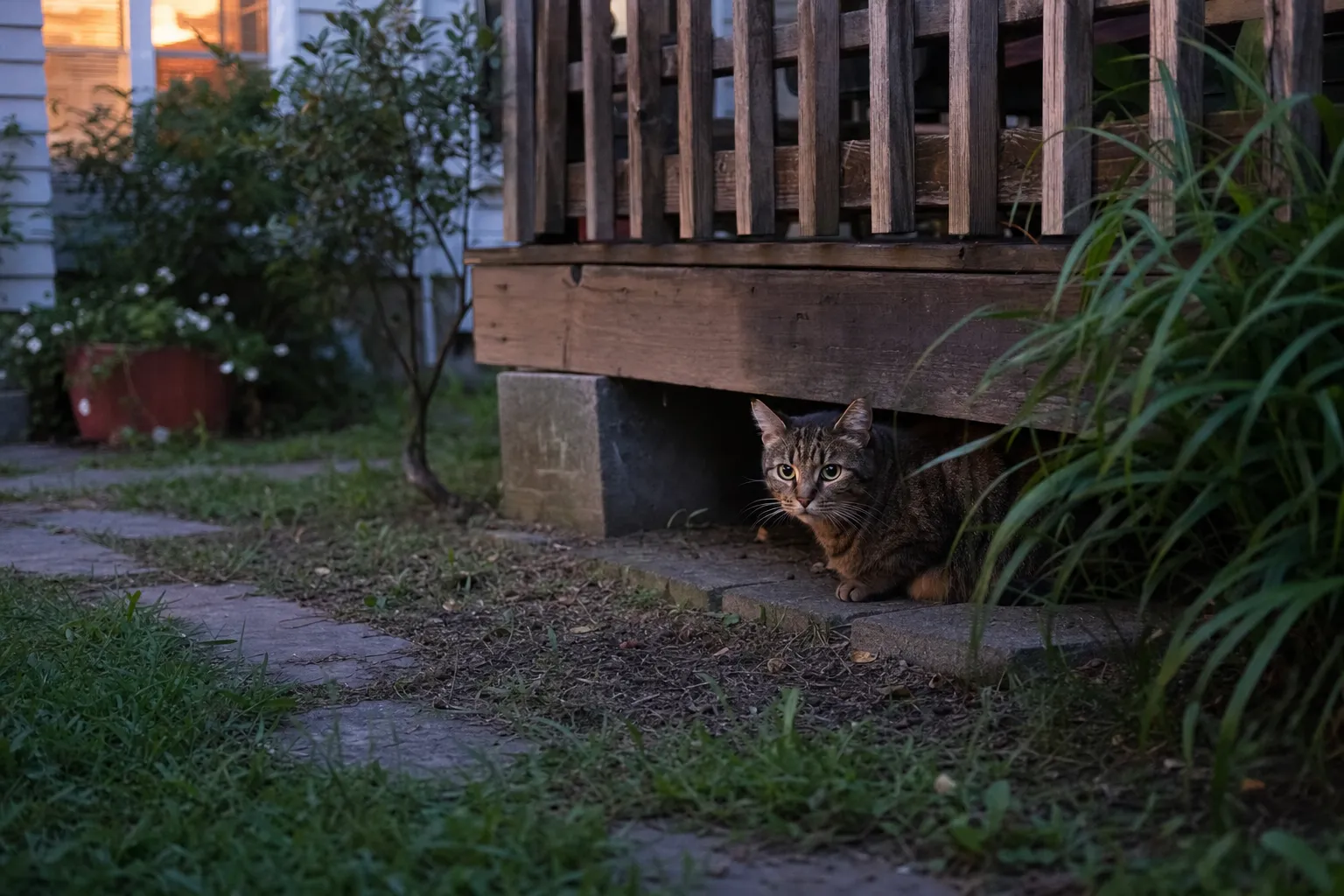
When a cat is missing, panic can push you toward the loudest or broadest next step. A better first move is to slow the moment down and search with the way a frightened cat may behave in mind. Start close, search with permission and care, and build a plan that makes it easier for your neighbors and local animal services to help.
1. Start with a calm reset and a close check
Before you head down the street, check every realistic hiding place inside your home. Cats can settle into places that feel impossible in hindsight: behind furniture, inside closets, beneath beds, in an open cabinet, a basement corner, or a garage. If your cat escaped from a particular door or window, note the exact point and time. That becomes the centre of your first search area.
Then move outside slowly. Bring a recent photo, a flashlight, and a notebook or phone for sightings. Avoid turning the first hour into a crowd scene. A worried cat may stay silent and tucked away, even when they can hear a familiar voice. The Missing Animal Response Network’s guidance on lost-cat behavior makes the same practical point: the most useful early search is often a careful physical search of the immediate area, not simply a broad drive or a stream of posts.
Start with the nearest cover: under the porch, beneath steps, inside dense shrubs, around HVAC units, behind bins, under parked cars, and along fence lines. Look rather than rush. Pause after calling your cat’s name softly, then listen. Take a second pass from a different angle, because a small shift in your position can reveal a space that looked empty a moment earlier.
Keep your voice familiar and low. Bring a favorite treat or food only if it helps your cat recognize the sound, but do not rely on noise alone to pull a scared cat out of cover. The purpose of the first search is to find a visual clue, a sound, or a likely hiding place. If you see your cat, resist the urge to rush forward. Stay low, speak softly, and make the next move feel safe.
2. Ask for access, not just a favor
Many searches stall because neighbors are asked to “keep an eye out.” That is kind, but it is not the same as checking the places a cat can actually hide. Knock on nearby doors with your cat’s photo and ask whether you may inspect protected spaces in their yard, garage, shed, crawl space, porch, or under-deck area. Let them know you will be careful, respectful, and brief.
Make your first circle small enough to search well. Look at every property immediately adjacent to yours before expanding outward. If a neighbor is not home, leave a concise note with your contact information and a clear request to check enclosed spaces before opening or closing them. A cat may be hiding in silence, or may have been accidentally shut inside a garage or shed.
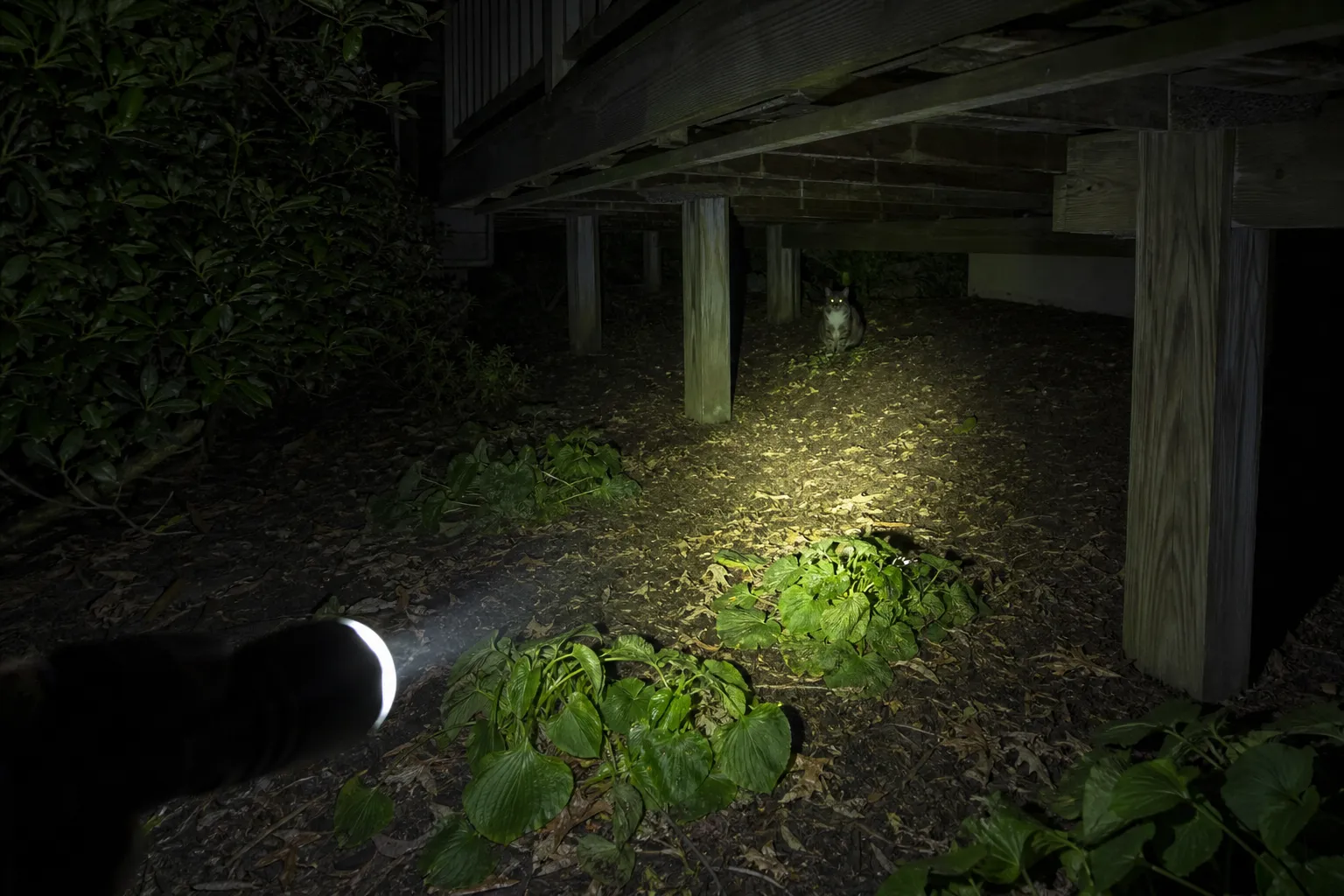
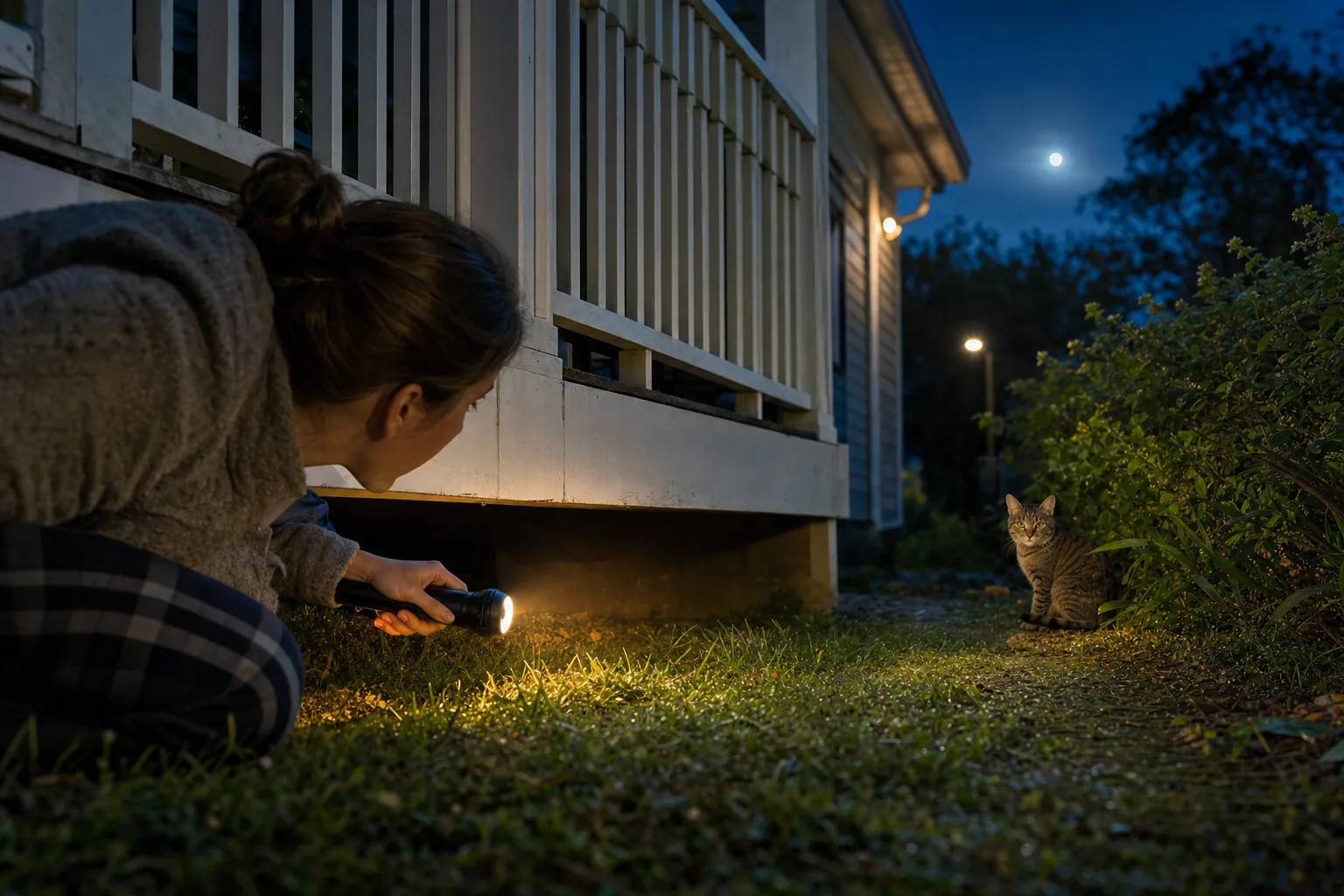
When you search, use a flashlight even in daylight. It helps you see into gaps and can catch eye reflection in a dark corner. Move slowly around the perimeter, then check the middle. Do not assume your cat will run to you when seen. Crouch, turn your body slightly sideways, speak gently, and give them a moment. A frightened cat can need time to decide that it is safe to move.
The HumanePro lost-cat checklist similarly recommends checking under decks and porches, crawl spaces, garages, and sheds, then repeating the search when the neighborhood is quieter. That practical sequence matters because it keeps your energy focused on the places most likely to be missed.
Be specific about enclosed areas. Ask neighbors to check their garages before they leave for work, their sheds before they lock up for the night, and any space beneath a deck or porch where a cat could enter but not easily be seen. Keep a note of every property you have checked, including the ones that were not accessible. Those are not dead ends. They are follow-ups that deserve another attempt.
3. Create a first-day search plan you can repeat
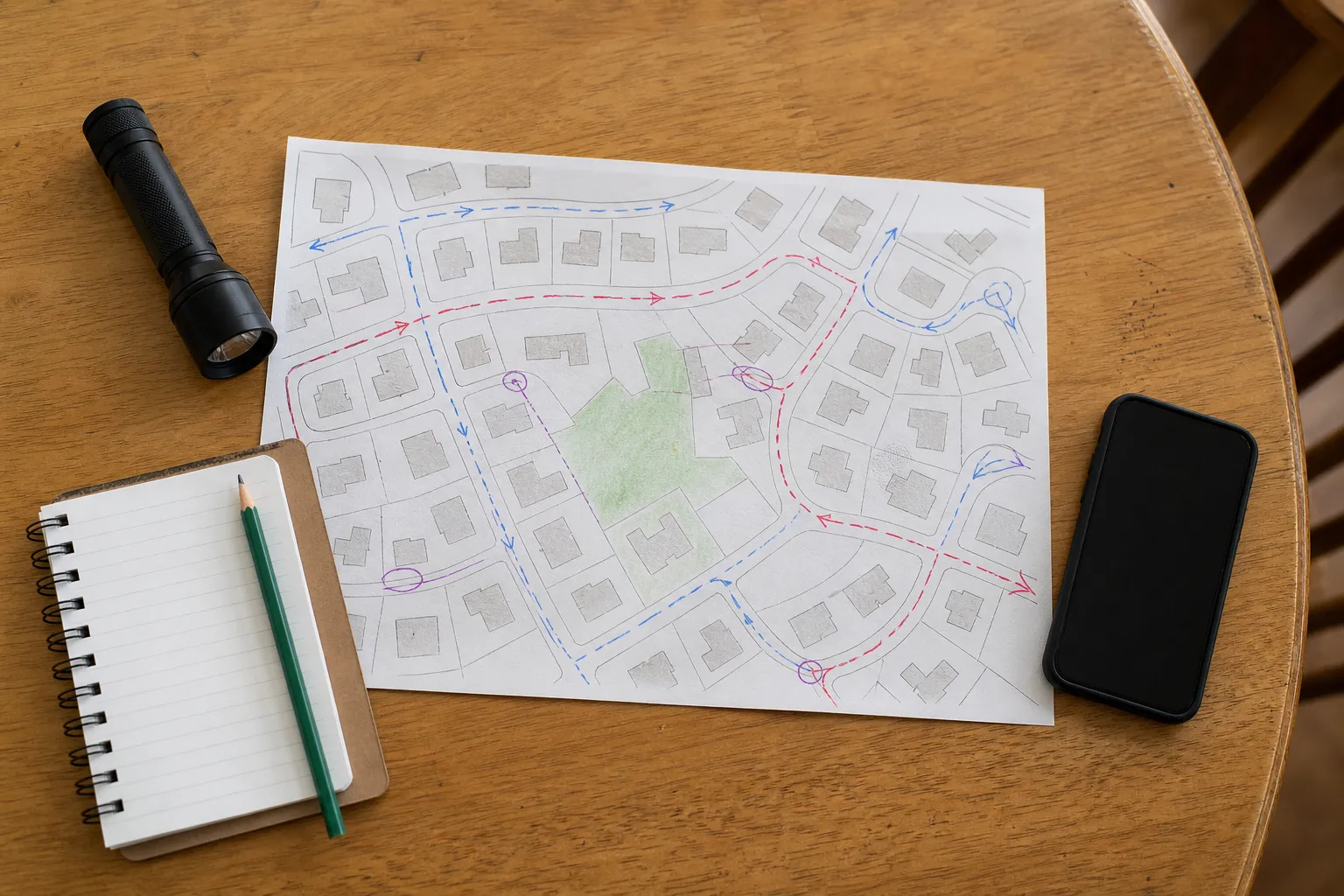
A written plan does not make the situation less emotional. It makes it easier to act when your mind is overloaded. Write down where your cat was last seen, every location you searched, every person you spoke with, and every possible sighting. Mark the time, the direction of travel, and anything distinctive the person noticed. This record helps you see patterns and prevents important follow-ups from getting lost in a busy message thread.
Divide your work into simple cycles. One cycle can be a quiet close search, a neighbor follow-up, a check of known hiding places, and a review of any new sightings. Repeat the close search at calmer times of day rather than racing farther away with every hour that passes. If you receive a sighting, verify the location and return with a calm plan instead of sending multiple people in at once.
Build a small support team with clear jobs. One person can contact shelters and veterinarians. Another can update a local lost-pet listing. Someone else can handle neighbor conversations or check messages. Keep one person responsible for the main log so that an old sighting, a duplicate report, or a missed callback does not scatter the search.
Use the log to separate confirmed information from hopeful possibilities. A clear photo, a neighbor who knows your cat, or a sighting that includes a precise place and time may guide your next move. A vague report from far away should be recorded, but it should not pull all your energy away from the close search without more detail. This balance lets you stay open to leads without losing the practical center of the plan.
Give each search cycle a clear end point. Take a short break to drink water, update the log, and decide what the next cycle needs to answer. That pause can prevent exhaustion from turning into random activity. It also makes it easier to tell a helper exactly what still needs checking, rather than asking everyone to repeat the same ground.
4. Share the right information with the right people
Once the close physical search is underway, make it easy for the local community to identify your cat. Use a recent, clear photo and include your cat’s name, color or markings, the neighborhood, the date last seen, and one reliable contact method. Keep the message factual. If your cat is fearful, say so, and ask people not to chase or corner them.
For a copy-ready layout that keeps the essential details easy to scan, use this lost-cat flyer template alongside your local outreach.
File reports with nearby shelters, animal control, veterinary clinics, and established lost-and-found pet networks. The Pet FBI lost-cat checklist is a useful reference for building out that wider notification work after your immediate search is moving. Visit shelters in person when possible, and keep your report current. A description can be misunderstood, while a careful in-person check gives you a better chance of recognising your cat.
Use local social groups carefully. A simple post with the location, photo, date, and contact details can bring valuable sightings. Be thoughtful with information that could be exploited. Ask anyone claiming to have found your cat to share a photo or a detail that is not in your post before you confirm identifying information. If a sighting arrives, thank the person, get the precise location and time, and ask whether the cat appeared calm, hiding, injured, or moving in a particular direction.
Flyers can be useful when they make a quick sighting easier to report. Place them where nearby residents, walkers, delivery drivers, and local service workers will see them. Use one clear photo and large contact details, not a crowded page of information. Check them regularly and replace any that have been damaged. A calm, consistent message gives people a simple action: look carefully, do not chase, and contact you with the exact place and time.
5. Use humane recovery tools when the situation calls for them
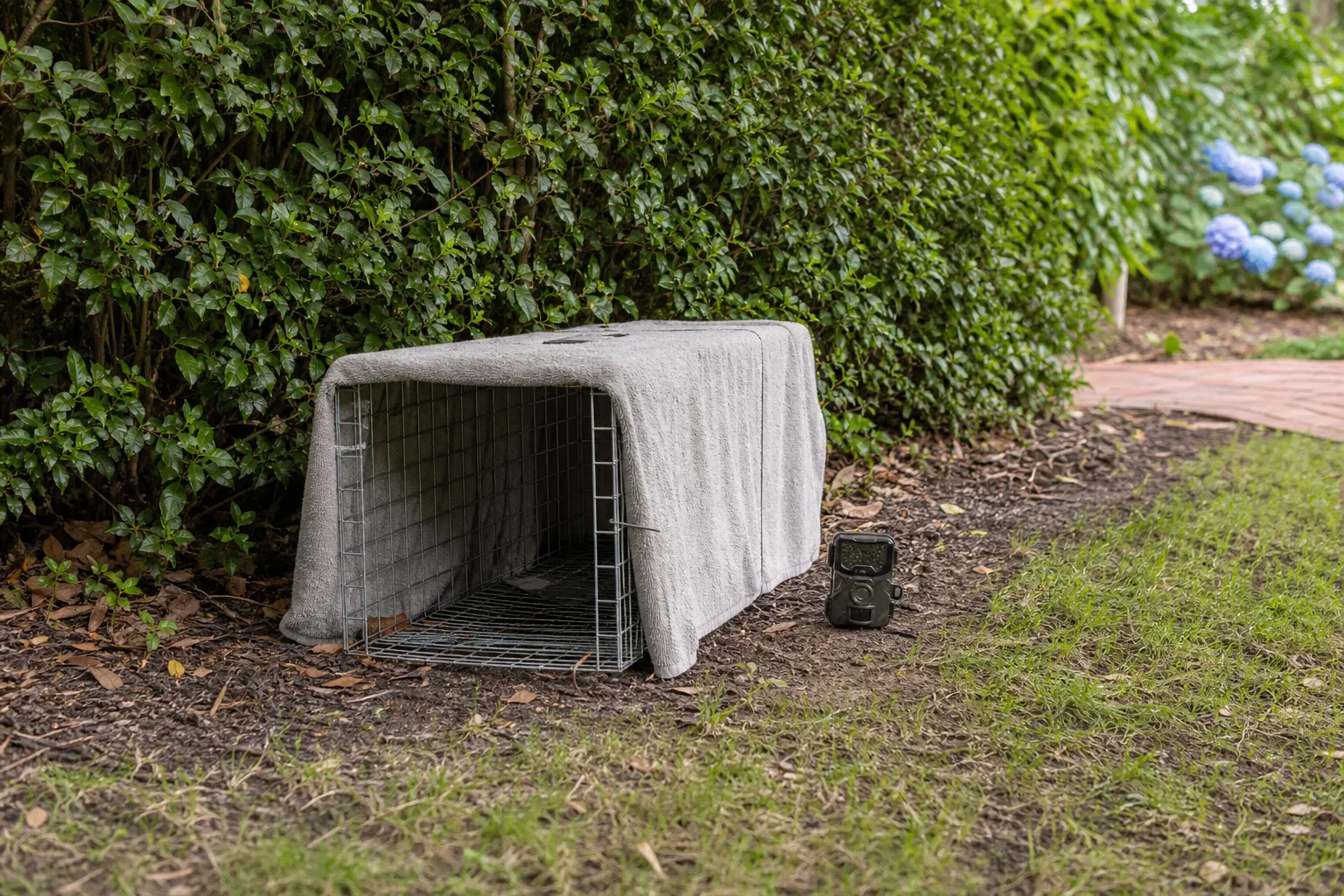
A frightened cat may not approach you, even if they are very close. When you have a credible sighting or a pattern of activity, a humane trap can be a useful tool. Borrow or rent one through a shelter, rescue, or experienced local volunteer when possible, and ask for setup guidance. Place it on level ground, protect it from weather, and check it frequently. A covered trap can feel less exposed, but the entrance must remain safe and clear.
A trail camera can also help you distinguish between a cat who is visiting an area and one who has moved on. The goal is not to set every tool at once. It is to use one tool with a clear purpose, then adjust based on what you learn. Petco Love Lost’s lost-pet resources also recommend pairing practical local-search work with a lost-pet report so that people who find a cat have a way to connect the sighting back to you.
Keep the focus on safety. Do not use harmful substances, leave traps unattended, or ask strangers to chase a scared cat. If your cat is injured, trapped in a dangerous location, or near traffic, contact local animal services, a veterinarian, or an experienced rescue professional for help.
Use a camera or trap only where you have permission and only when you can respond promptly. If another animal appears, release it safely according to local guidance and reassess the setup. The tool should create information or a safe recovery opportunity, not add another risk. When in doubt, ask a shelter or rescue contact to talk through the setup before you begin.
6. When intuitive support may be helpful
Practical search work comes first. If you have already started that work and want additional structured support, Lindsey’s Lost Pet Location Protocol is designed for active missing-pet cases. It begins with Animal Communication Reiki and a written report before map information is reviewed, so you have a clear record of the impressions before physical details are considered.
It is not live tracking, a replacement for shelters or search teams, or a guarantee of recovery. It is supportive guidance for guardians who want another grounded layer of support while they continue a real-world search. You can request support directly from Lindsey when the timing and scope feel right.
Keep this close
Your calm first steps
- Search inside, then search close to the escape point.
- Ask neighbors for permission to check hidden spaces carefully.
- Use a written log for searches, sightings, and follow-ups.
- Notify local shelters, veterinary clinics, and trusted lost-pet networks.
- Use humane traps or cameras only with a clear plan and close monitoring.
Frequently asked questions
Questions pet guardians often ask
Where should I look first for a lost cat?
Start inside your home, then search the immediate area around the escape point. Check beneath porches, decks, stairs, shrubs, crawl spaces, garages, sheds, and other small protected places. Ask neighbors for permission to look carefully rather than asking them to take a quick glance.
Should I search for my lost cat at night?
A quiet nighttime search can be useful because a frightened cat may feel safer moving or responding when the neighborhood settles. Move slowly, use a flashlight to check protected spaces for eye reflection, and avoid calling continuously or bringing a loud group.
How long should I keep searching for my cat?
Keep the search organized and persistent. Continue checking the close area, following up on credible sightings, updating local shelters and lost-pet listings, and revisiting places that could have been missed. A cat who is hiding, trapped, or frightened may not appear when you first search.
Should I use a humane trap for a lost cat?
A humane trap can be helpful for a frightened cat that will not approach, especially after a confirmed sighting. Place it safely on level ground, follow local guidance, protect it from weather, and monitor it closely so any animal caught can be handled promptly and humanely.
Can intuitive support replace a physical lost-pet search?
No. Intuitive support is not a replacement for shelters, veterinarians, search teams, wildlife authorities, local animal control, or a careful physical search. Lindsey’s Lost Pet Location Protocol is designed to support guardians who are already taking practical action.
Related posts
Continue your search planning
Lost Pet Searches
How to Find a Lost Cat at Night: A Calm Plan
A quiet, practical nighttime search plan for checking close hiding places, gathering sightings, and helping a missing cat feel safe enough to return.
Read the guide →
Lost Pet Searches
How to Find a Lost Dog at Night: A Practical Search Plan
A steady, practical nighttime search plan for organizing the first hours, responding safely to sightings, and bringing a missing dog home.
Read the guide →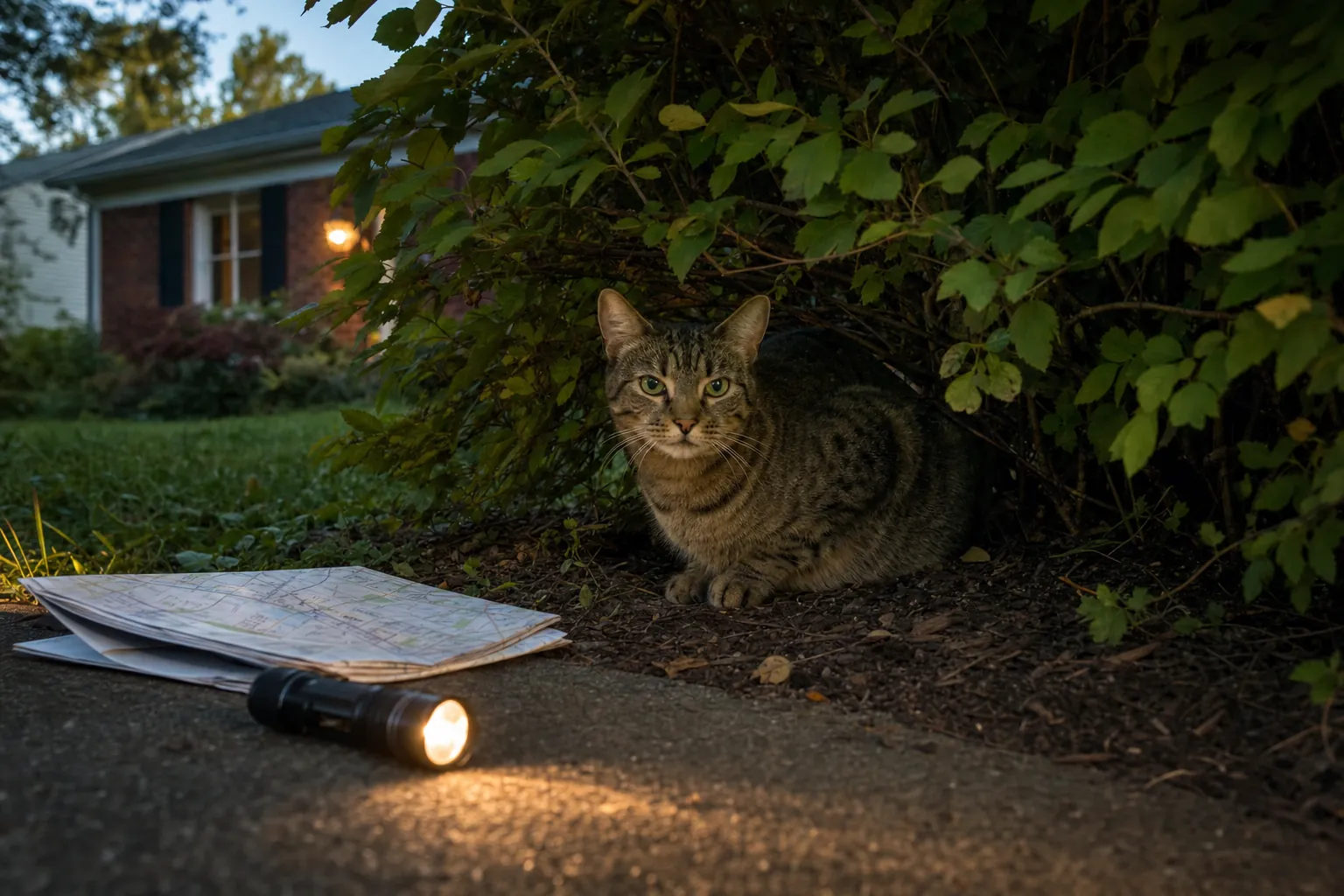
Lost Pet Searches
How Far Do Lost Cats Travel? Start Close First
A practical way to set a search radius for a missing cat, use behavior instead of guesswork, and expand only when real sightings point the way.
Read the guide →