
When a cat is missing, it is natural to hope they will simply find their way home. Some do. But waiting for that to happen can leave a frightened cat close by, unnoticed and without help. The better question is not whether your cat can return. It is what you can do now to search well, keep a safe path open, and make each next step useful.
Some cats return, but it is not a plan to rely on
Cats have strong awareness of familiar spaces, routines, scents, and sounds. A cat who remains close to home and feels safe enough to move may return through a familiar route. Outdoor-access cats may know the immediate area well. An indoor-only cat who slips out can react very differently, often finding the nearest protected place to hide rather than setting off on a confident journey home.
There is no reliable promise that a lost cat will navigate home alone. Fear, injury, traffic, an enclosed garage, bad weather, or an unfamiliar drop-off can interrupt the ability to return. The Missing Animal Response Network’s lost-cat behavior guidance explains why frightened cats may hide silently near the escape point, even when their guardian is close.
Hope is useful when it keeps you steady. It becomes less useful when it turns into waiting. Begin searching right away, then use what you learn to decide whether your cat may have a clear route home, is likely hiding nearby, or needs a different recovery plan.
1. Search inside before you search the neighborhood
Before assuming your cat made it outside, check your home slowly and completely. Look behind furniture, inside closets, beneath beds, in open cabinets, basements, garages, and vehicles. Ask everyone in the household when they last saw your cat and which doors, windows, or rooms were open. A cat can stay quiet in an unexpectedly small space for a long time.
If you know the escape point, make that your center. Walk the immediate area with a current photo, a flashlight, and a way to take notes. Check under decks, porches, steps, shrubs, crawl spaces, sheds, parked cars, and fence lines. Use the flashlight even in daylight to look into dark gaps. Stop regularly and listen. Calling constantly or arriving with a loud group can make a fearful cat stay hidden longer.
Lindsey’s lost-cat search plan gives a fuller close-search sequence. The important thing is to search thoroughly before widening the radius. The places closest to the escape point are often the places that are easiest to rush past.

2. Give your cat a safe, familiar way to return
When it is safe for your household, keep one familiar entry point available and make the area near it calm. Avoid repeatedly changing the setup, moving furniture around the entry, or filling the yard with people. Your cat may not come straight to you, but a familiar door, porch, or window can matter if they return when the neighborhood is quiet.
Do not make that entry point your entire strategy. Leave a trusted contact number with neighbors, keep your phone charged, and decide who can respond if your cat appears. If you use food, use it purposefully in one monitored location, not in several scattered spots. Scattered food can attract other animals and make it harder to tell where your cat may be returning.
A familiar blanket or bedding item near a safe entry may be reasonable when it will stay dry and does not create a hazard. Avoid putting yourself or your household at risk by leaving doors unsecured. The goal is a quiet opportunity for return, alongside the real search work that tells you what is happening outside.
3. Ask neighbors to check enclosed places
A cat that knows the neighborhood can still become trapped. Ask immediate neighbors whether you may check garages, sheds, crawl spaces, porches, and under-deck areas. Be specific. “Please keep an eye out” is kind, but it is not the same as opening a shed or checking behind stored items before the door is locked again.
Bring a current photograph and explain that a frightened cat may not answer when called. Ask people not to chase, corner, or try to grab your cat. Instead, request the exact time, location, direction of travel, and a photo whenever possible. The Pet FBI lost-cat action plan is a helpful reference for reporting a missing cat while you continue the physical search close to home.
Repeat the most important checks. A cat may move after the first search, and a neighbor may not have access to an enclosed space until later in the day. Keep a simple list of which properties were checked, which were not accessible, and which need a follow-up. That protects you from doing frantic laps while a likely hiding place remains unexamined.
4. Change the plan when your cat is lost away from home
A cat lost from a veterinarian’s office, boarding facility, vehicle, new home, hotel, or unfamiliar place has a different problem to solve. They may not know the area or have a familiar route to follow. Start with the exact point where the cat was last seen and search the closest protected cover first. Speak with the people who use the property every day, including staff, neighbors, groundskeepers, and delivery drivers.
Ask whether there are loading areas, open crawl spaces, storage rooms, garages, storm drains, thick landscaping, construction work, or buildings that are closed overnight. These details can shape the search more than an assumption that your cat has traveled a certain distance. Share a clear photo, one contact number, and a note that your cat may hide rather than approach.
In an unfamiliar area, do not depend on home scent alone to solve the situation. Focus on creating calm, collecting verified information, and returning to the last-seen area at quieter times. If the location is far from home, keep someone available to respond to a credible sighting instead of making a single rushed visit and leaving again.
5. Let real sightings guide your next move
Do not expand your search just because time has passed. Expand it when credible information points you there. A clear photo, a camera image, or a neighbor who knows your cat is more useful than a vague report of a similar-looking cat far away. Record the time, exact location, description, contact person, and what the cat was doing.
A sighting log makes patterns easier to see. If your cat is reported near the same hedge or yard at a similar time, the next move may be a quiet observation plan, not a larger search party. If there are no credible sightings and your cat is indoor-only, return to the close search and the enclosed spaces that could have been missed.
For a practical way to decide how wide to search, use the lost-cat distance guide. It explains why lifestyle and escape circumstances matter more than a single fixed number of blocks.

6. Use a camera or humane trap only with a clear reason
If you have a credible sighting near one place, a small camera can help answer an important question: is your cat returning there, and when? Use your own property or a place where you have permission. Keep the setup away from traffic and check it responsibly. A camera can turn a hopeful possibility into useful information without adding pressure to a scared cat.
A humane trap may be appropriate if your cat is returning to a predictable spot but will not approach. Get guidance from a shelter, rescue, or experienced local volunteer first. A trap needs a safe location, weather protection, frequent monitoring, and a plan for any animal that enters it. Never leave it unattended overnight.
These tools are not a substitute for checking nearby hiding places and following up on reports. They are most useful when they answer one clear question or create one safe recovery opportunity. The Petco Love Lost resources also emphasize keeping lost-pet information current so a person who finds your cat has a direct way to contact you.

7. Keep the search going without exhausting yourself
It is hard to stay organized when you are scared. Give the search a simple rhythm: a quiet close search, neighbor follow-ups, report updates, review of sightings, then a short break. Ask friends or family to take specific jobs, such as checking messages, calling local animal-care resources, or updating the log. One person should keep the master list so important details do not get lost.
Search again during quieter times. Lindsey’s nighttime search guide can help you plan a calmer flashlight pass when a hidden cat may feel safer moving or responding. Keep checking shelters, veterinary clinics, and local lost-pet networks as appropriate, especially if your cat has been missing long enough that someone else may have found them.
Be careful with scams. If someone says they found your cat, ask for a current photo or a detail that was not included in your public post before sending money or sharing more information. When there is immediate danger, injury, a cat trapped in a hazardous place, or traffic risk, contact local animal control, a veterinarian, or an experienced rescue professional.
At the end of each search cycle, pause long enough to write down what changed. Did a neighbor gain access to a shed? Did a camera show activity? Did a sighting include a precise time? Did someone check an enclosed space that had been unavailable earlier? A short review prevents hours of effort from becoming a blur, and it helps you choose the next task because it is needed, not simply because it feels urgent.
When structured intuitive support may fit
Practical search work comes first: close checks, neighbor access, current reports, documented sightings, and urgent professional help where needed. If you are already taking those steps and want additional structured support, Lindsey’s Lost Pet Location Protocol is for active missing-pet cases.
The process begins with Animal Communication Reiki and a completed written report before map information is reviewed. It is not live tracking, ongoing monitoring, or a promise that a pet will return. It is supportive guidance for guardians who want a documented process alongside an active, real-world search. Lindsey’s lost-pet support overview explains the boundaries and what she considers before accepting a request.
Missing dogs can respond differently to people, noise, and sightings. For a dog who is missing, use Lindsey’s lost-dog search guide to plan a safer, less pressured response.
Keep this close
What to do while you hope your cat returns
- Search inside your home, then make the escape point the center of a careful close search.
- Keep one safe, familiar return opportunity open when it is appropriate for your household.
- Ask neighbors to check enclosed spaces, not just watch from a distance.
- Write down exact sightings and let confirmed information guide where you search next.
- Use cameras or humane traps only with permission, monitoring, and a clear purpose.
Frequently asked questions
Questions pet guardians often ask
Can a lost cat find its way back home?
Some cats do return, especially when they remain near familiar territory and have a safe chance to move. There is no guarantee. A missing cat may be frightened, hiding, trapped, injured, or in an unfamiliar place, so active searching and follow-up are still important.
Should I leave the door open for my lost cat?
Only do what is safe for your household, other animals, and the property. A familiar entry point can help when it is safe to leave accessible, but it should be one part of an active search plan rather than the only thing you do.
How long should I wait for my cat to come home?
Do not wait before beginning a close, careful search. Start inside your home, then check the area around the escape point and ask neighbors to inspect protected spaces. Keep following confirmed sightings and local lost-pet reports as the search continues.
Will putting food outside bring my cat home?
A small, monitored setup may be useful when you have a reason to believe your cat is nearby. Food alone can attract other animals and create confusion. It works best as one purposeful part of a calm recovery plan, ideally with a camera and permission to use the location.
What should I do if I spot my lost cat?
Do not chase. Lower your body, speak softly, and make the area feel quieter and less pressured. Note the exact time and location, then plan a gentle follow-up. A frightened cat may need space before they will approach anyone, even a familiar person.
Related posts
Continue your search planning
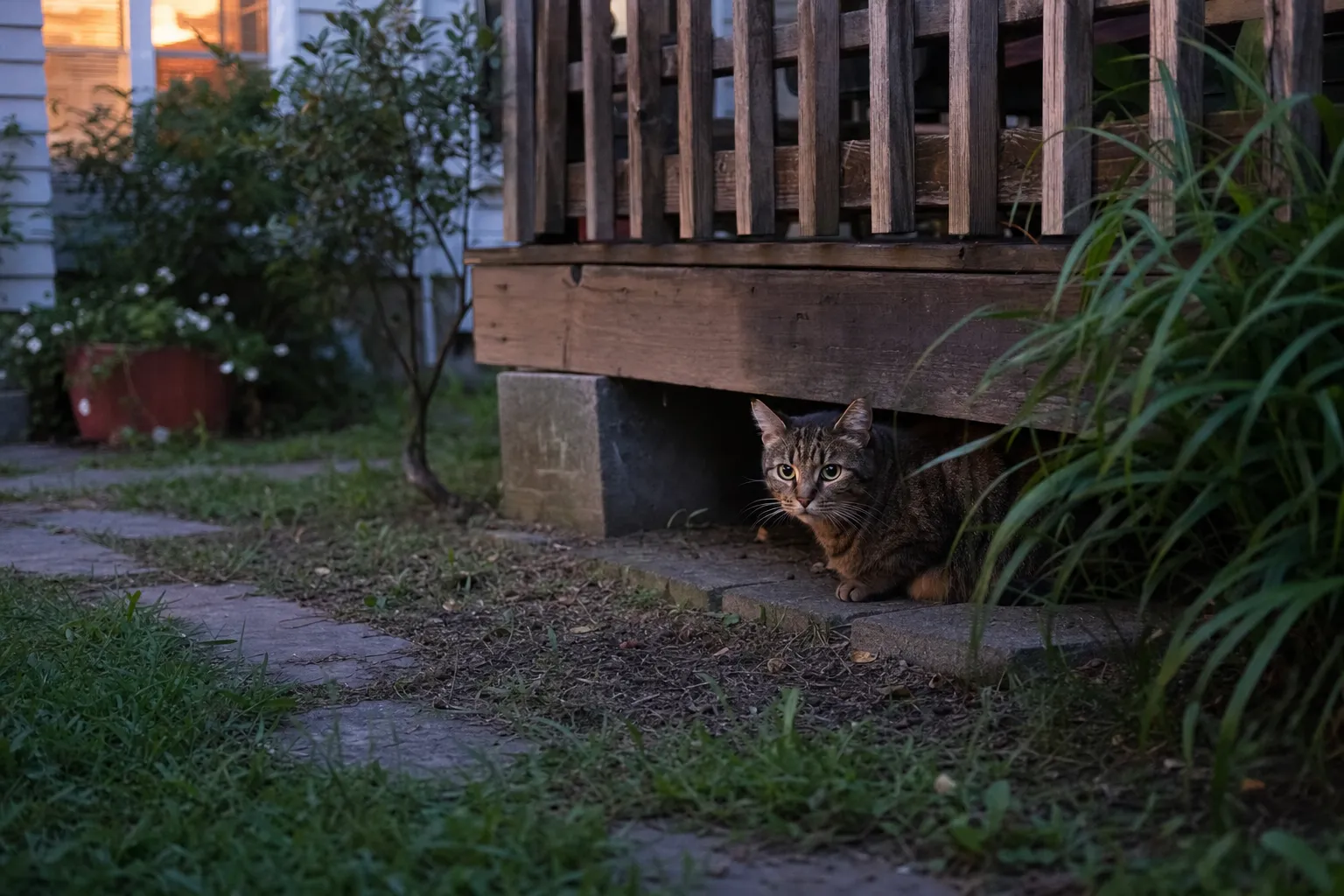
Lost Pet Searches
How to Find a Lost Cat: A Practical Search Plan
A calm, practical guide to searching close, asking for access, using humane tools, and building a plan when your cat is missing.
Read the guide →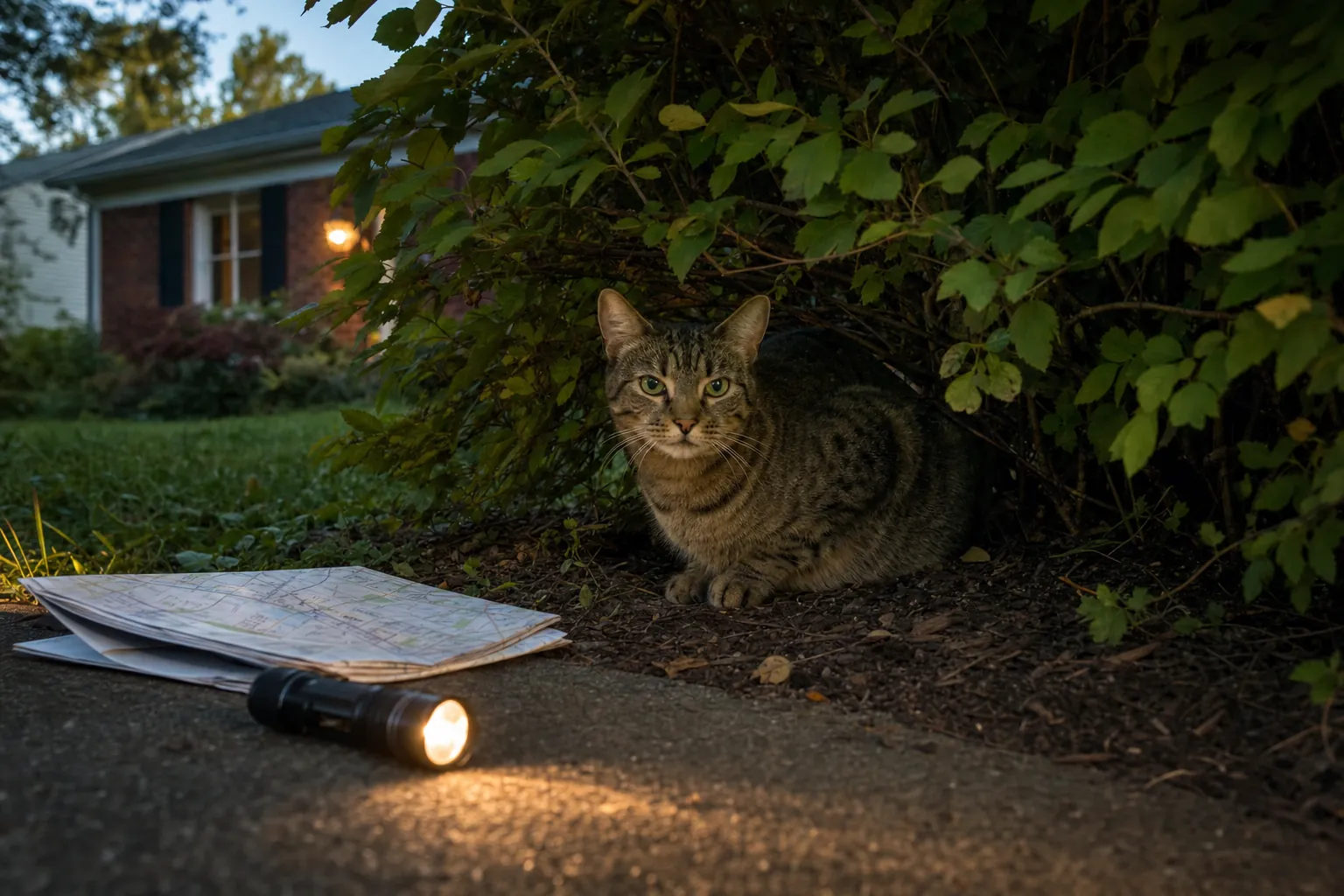
Lost Pet Searches
How Far Do Lost Cats Travel? Start Close First
A practical way to set a search radius for a missing cat, use behavior instead of guesswork, and expand only when real sightings point the way.
Read the guide →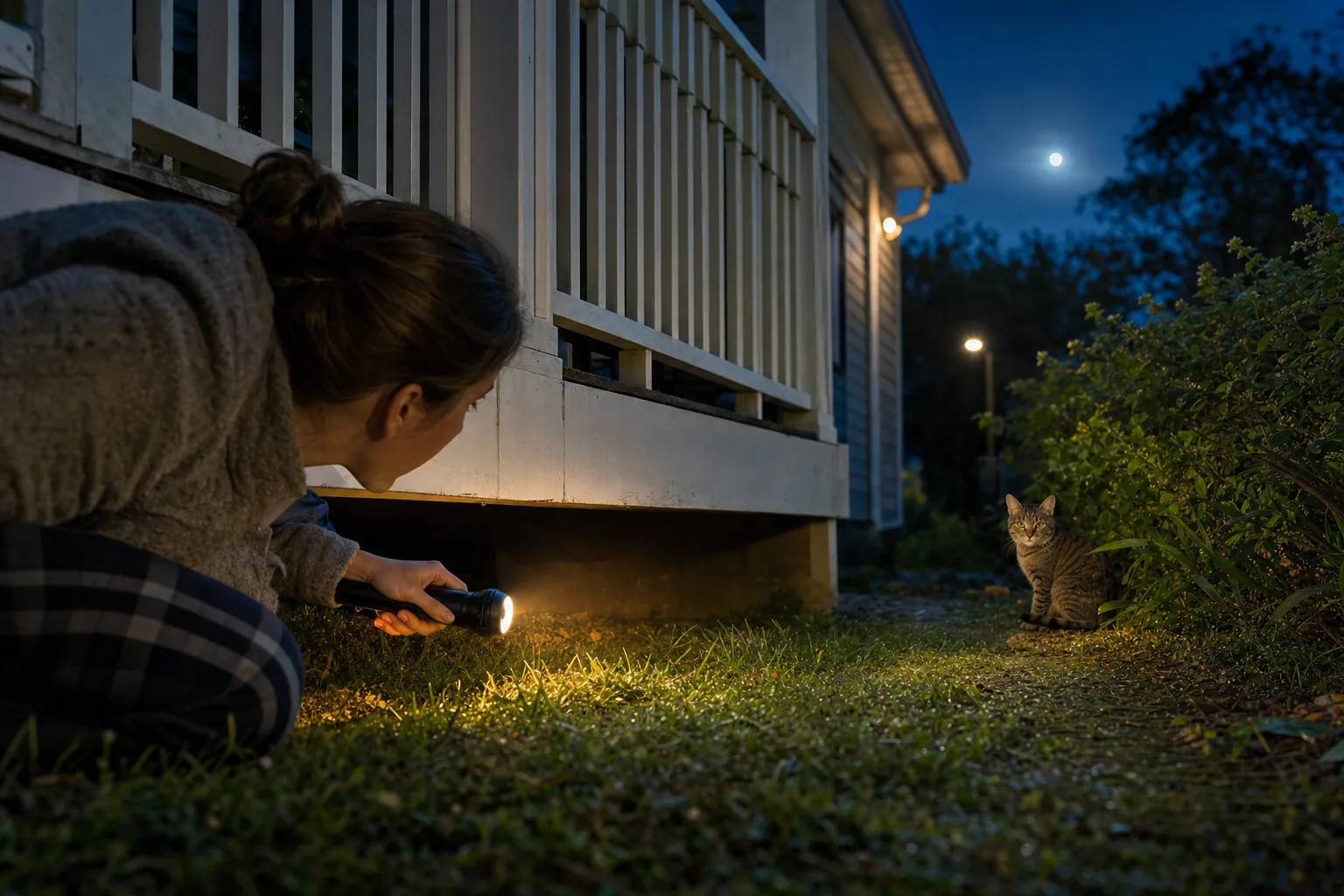
Lost Pet Searches
How to Find a Lost Cat at Night: A Calm Plan
A quiet, practical nighttime search plan for checking close hiding places, gathering sightings, and helping a missing cat feel safe enough to return.
Read the guide →