
When an indoor-only cat slips outside, the instinct is to widen the search as quickly as possible. In many cases, the better first move is slower and closer. A cat who has never chosen to be outdoors can become overwhelmed, settle into the nearest concealed space, and stay quiet even when they hear the person they trust most.
This is frightening, but it gives you a useful starting point. Your first job is not to make a cat travel home from far away. It is to turn the immediate area into a careful, repeatable search zone, then keep clear paths open for a sighting, a safe return, or help from the people around you. If there is traffic, severe weather, injury, water, or another immediate danger, contact the appropriate local authority first.
Start by confirming the point of escape
Before you head down the block, take ten focused minutes inside. Check closets, beds, laundry piles, recliners, cabinets, garages, basements, and every room that may have been opened recently. Cats can hide in astonishingly quiet places, and a full indoor search prevents everyone from working from the wrong assumption.
Then identify the most likely exit and the time window. Was a door left open when groceries arrived? Did a screen fail? Did a worker or visitor come through? Look at doorbell, driveway, or yard-camera footage if it is available. Knowing the point of escape gives your search a center. It also helps you explain the situation accurately to a neighbor, shelter, or volunteer.
Write down the last confirmed time, the exit, your cat’s name, their normal temperament, and a few identifying details. Use one current photo that shows their face and any distinctive markings. The ASPCA’s lost-pet guidance recommends keeping identification and contact details current, including for indoor-only pets. A reachable phone number and an accurate description make it much easier for a finder to connect a cat with home.
Search low, close, and quietly first
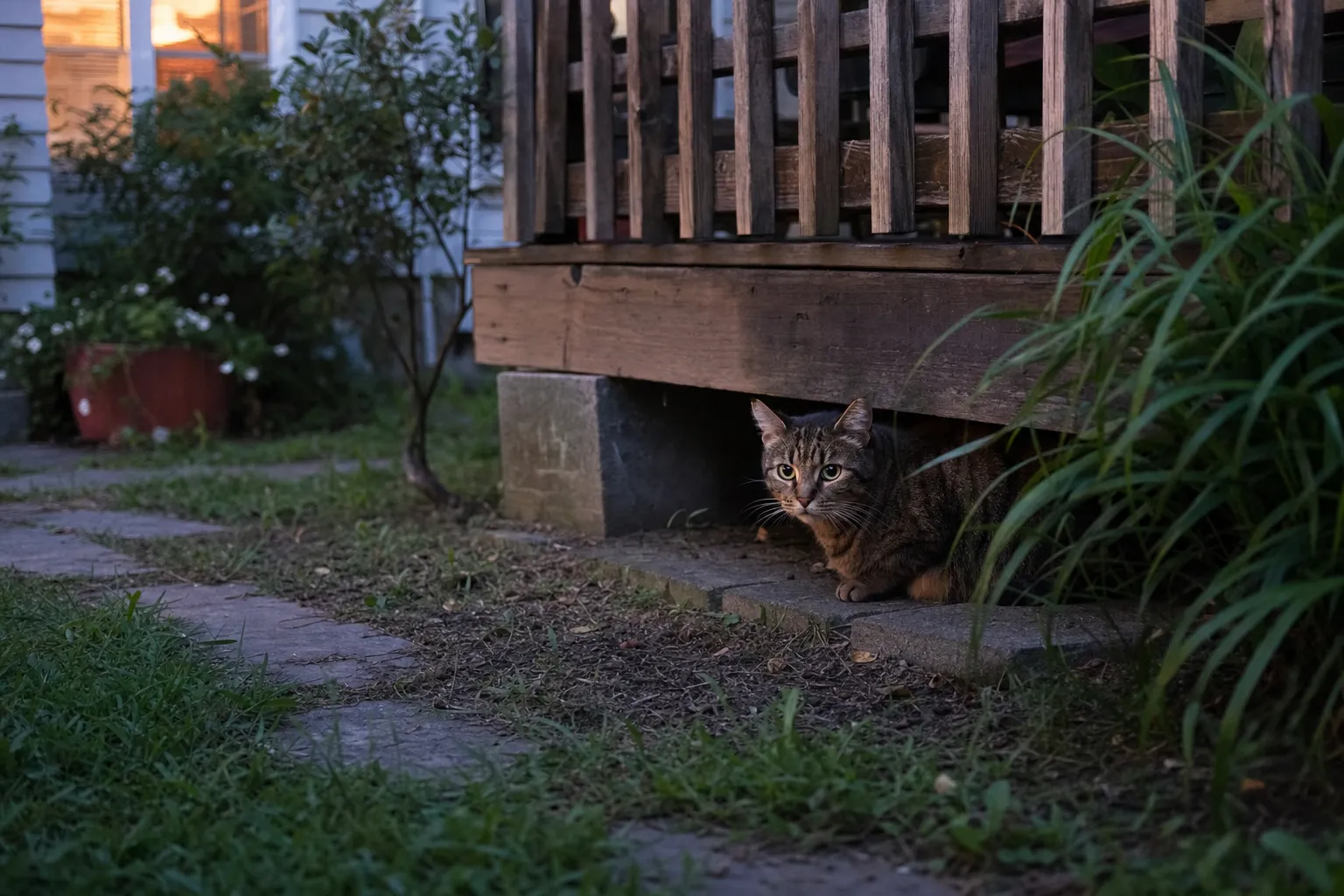
An indoor cat outdoors may not behave like the companion who comes when called from another room. Fear can make a familiar cat still, silent, and difficult to see. Begin with the edge of your home and work outward in small, deliberate loops. Get low enough to look under rather than across.
Use a flashlight even before dark to look beneath porches, decks, steps, shrubs, parked cars, pallets, crawl-space openings, and shed edges. Check the warm, dry, enclosed spaces a frightened cat can reach without crossing a large open area. Ask permission before entering a neighbor’s yard, garage, or garden. Give them a clear photo and explain that your cat may be hiding silently rather than wandering visibly.
A quiet pause matters as much as calling. Say your cat’s name once in the voice they know, make a familiar sound such as opening a treat container, then wait and listen. Do not assume silence means the cat is gone. The SPCA of Northern Virginia’s indoor-cat advice likewise begins at the escape point and encourages a close, methodical search rather than a rushed sweep of distant streets.

Choose the calmest hours for a second close search
Once the first daylight check is complete, return when the neighborhood is quieter. Early morning or later evening can reduce traffic, conversation, lawn equipment, and other activity that makes a cautious cat remain tucked away. Bring a flashlight, your phone, a recent photo, and a simple way to record where you checked.
Move slowly and avoid turning the search into a crowd. Several people calling from different directions, shining lights into every opening, or reaching toward a frightened cat can make the space feel less safe. One or two calm people can cover a small area better. If you see your cat, pause. Speak softly, lower your body, avoid a direct rush, and consider how to create a safe, low-pressure route rather than trying to grab them immediately.
Do not put yourself in danger to look under a vehicle, enter a roadway, climb into an unstable space, or cross private property without permission. If your cat is in an unsafe location, call the people equipped to help. The goal is a reunion, not a risky rescue attempt that could cause a cat to bolt or put a person in harm’s way.
Make your home easy to recognize and re-enter
If it is safe to do so, make the most likely entry point calm and accessible while you are nearby. Keep the area quiet. Place a familiar blanket, a worn shirt, or another item that carries the ordinary scent of home near that spot. Avoid leaving a large amount of food unattended, which can draw wildlife or other animals and make the area less comfortable for your cat.
Check your own camera footage or a simple wildlife camera if you have one. A camera can turn an anxious guess into a useful pattern: whether a cat is visiting after dark, which direction they approach from, and whether a safe return point needs to move. It can also help you avoid repeatedly checking an empty place while your cat uses a different side of the house.
Keep doors, garage spaces, and other entrances controlled. You do not want a desperate search to create a new escape route for another animal or leave a home insecure. If there are other pets in the household, keep their routine steady and reduce commotion around the return point as much as possible.
Build one search log instead of relying on memory
In the first hours, every detail can feel urgent. That is exactly when a simple log helps. Record where you searched, who checked a neighbor’s shed, the time of any sighting, the direction of travel, and whether there is a photo or video. Note what is confirmed and what is only a possibility. A calm record protects you from walking the same ground again and again while a useful lead gets lost in a stream of messages.
Keep one version of your contact information and your cat’s description. If you share an alert online or make a flyer, use the same clear photo, general last-seen area, date, and reliable contact method. You can use the site’s lost cat flyer template to keep the notice useful without oversharing. Ask anyone reporting a sighting for the exact time and location, a photo if they could take one safely, and what made them think it was your cat.

Ask neighbors for specific help
A general post asking everyone to keep an eye out is a start, but a specific request is easier to act on. Let immediate neighbors know that an indoor-only cat is missing and may be hiding quietly nearby. Ask them to check enclosed spaces before opening or closing them: garages, sheds, greenhouses, crawl spaces, under-deck storage, and vehicles that have been sitting still. Ask them not to chase a cat they see.
Give them your photo and one way to reach you. If someone spots your cat, ask them to stay back, keep the location visible if safe, and contact you with the exact place and time. A clear, quiet report is more helpful than ten people trying to follow the cat at once. If the cat is seen at a neighbor’s property, get permission and plan the response before walking in.
Contact the shelters, animal control services, veterinary clinics, and local lost-and-found groups that serve your area. Follow each organization’s process, and check listings yourself rather than relying only on a perfect description match. A scared cat may be described differently by a finder. Keep your microchip registration, collar information, and contact details current so a scan can lead back to you.
Use humane tools carefully when a close search is not enough
If you have a credible sighting but your cat remains too frightened to approach, contact a local shelter, animal-control agency, veterinary office, or qualified recovery professional for advice about humane trapping. A trap is not a set-and-forget answer. It needs a safe location, frequent monitoring, weather protection, and a plan for what to do if you catch wildlife or another animal. Follow local guidance and never leave a trapped animal unattended.
A camera can help determine whether your cat is actually visiting the area before you change the plan. If you do use a humane trap, make it part of a quiet, documented response to a real lead. Do not place traps where they create hazards, block access, expose an animal to extreme weather, or violate property rules. The right approach is deliberate and humane, not frantic.

Expand only when the evidence asks you to
It is natural to picture a cat traveling farther with every hour. Start with what you know instead. Extend your close search methodically as sightings, camera footage, or a realistic escape route point outward. The site’s guide to how far lost cats travel can help you use evidence rather than panic to decide when to widen the area.
Continue checking nearby hiding places after the first day. A cat who was too scared to move while the street was busy may appear later, especially when people believe the search is over. Refresh notices and follow up with shelters, but keep the plan sustainable. If the search becomes long-term, the guide on shifting a lost-pet search into a sustainable routine offers a compassionate framework that can help you preserve your energy without closing the door on reunion.
How Lindsey can support a lost indoor-cat search
Practical recovery work comes first: close physical searching, accurate reports, shelter and animal-control follow-up, veterinary care, safe handling, and a thoughtful response to real sightings. Lindsey’s Lost Pet Location Protocol can offer structured intuitive support alongside that work. It begins with documented notes and does not provide live tracking, on-demand updates, or guaranteed outcomes.
If your cat is missing right now, start with the closest sheltered spaces and a calm plan for the next few hours. For a separate nighttime checklist, see how to find a lost cat at night. For the broader steps that follow a cat’s escape, the site’s lost cat search plan gives you a practical companion resource.
A close-to-home checklist for a lost indoor cat
- Search the home thoroughly before assuming your cat got outside.
- Identify the likely exit and last confirmed time.
- Check low, covered spaces immediately around the escape point.
- Use a flashlight, a calm voice, and quiet pauses to listen.
- Ask immediate neighbors to check enclosed spaces and report sightings without chasing.
- Keep one clear photo, contact method, and search log.
- Use cameras or humane tools only as part of a safe, monitored plan.
- Expand the search when real evidence points you outward.
Frequently asked questions
Where should I look first for a lost indoor cat?
Start inside, then begin immediately outside the most likely exit. Check low, covered spaces with a flashlight: beneath porches, decks, steps, shrubs, vehicles, sheds, and crawl-space openings. An indoor-only cat may hide silently very close to home.
Should I keep calling my indoor cat outside?
Use a calm, familiar voice in short intervals, then pause to listen. A frightened cat may recognize you without answering or coming forward. Repeated shouting, a crowd, or people pushing into a hiding place can add pressure rather than help.
How long can an indoor cat stay hidden after escaping?
There is no reliable deadline. A frightened cat may stay concealed longer than a guardian expects, which is why a documented, repeatable search plan matters. Keep current alerts, contact details, and shelter follow-up active while you continue safe, close checks.
Can Lindsey help find a lost indoor cat?
Lindsey’s Lost Pet Location Protocol offers structured intuitive support alongside practical recovery work. It does not replace animal control, shelter follow-up, veterinary care, humane trapping guidance, or a safe response to a confirmed sighting. It does not provide live tracking or guaranteed outcomes.
Related posts
Lost Pet Searches
How to Find a Lost Cat: A Practical Search Plan
A calm, practical guide to searching close, asking for access, using humane tools, and building a plan when your cat is missing.
Read the guide →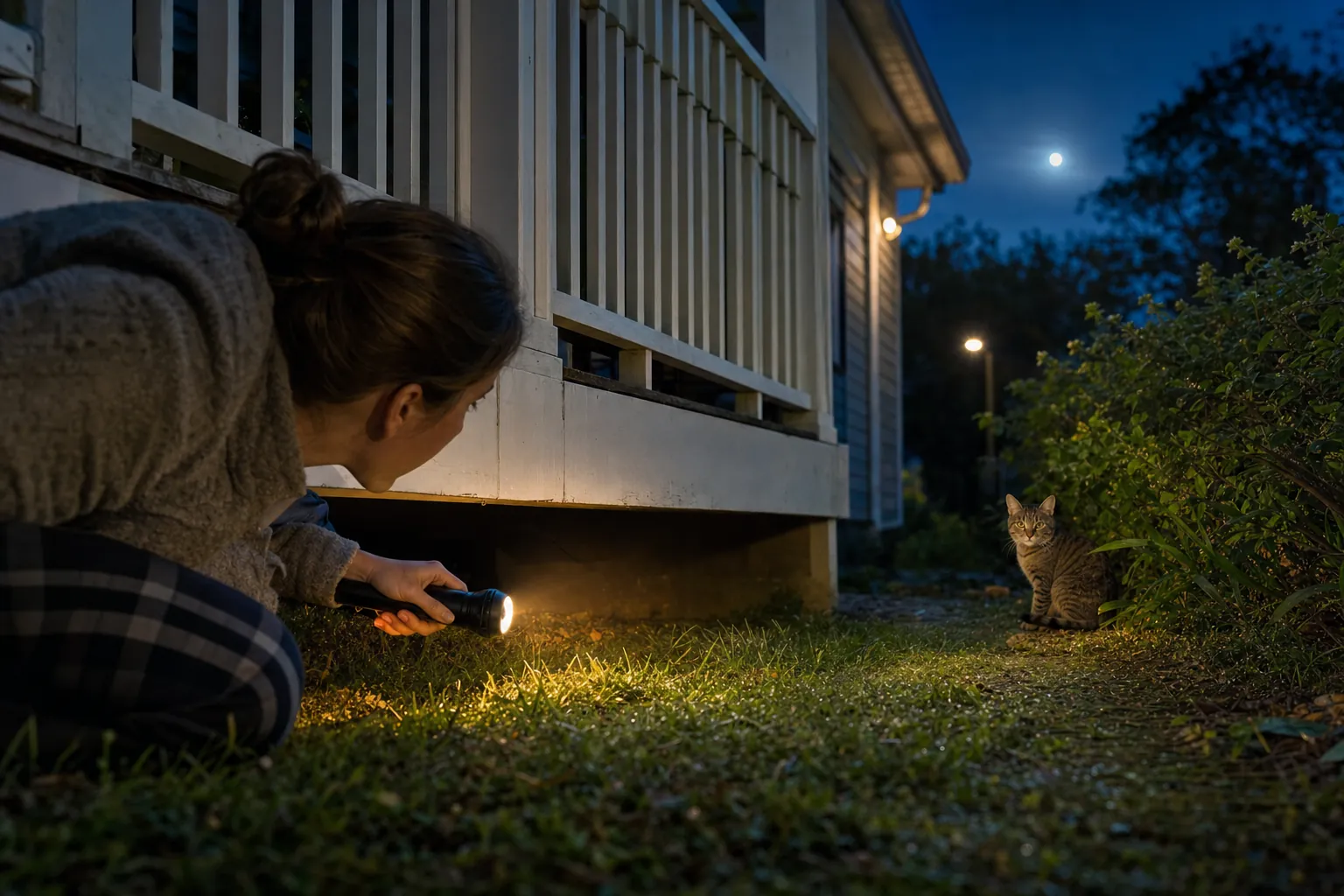
Lost Pet Searches
How to Find a Lost Cat at Night: A Calm Plan
A quiet, practical nighttime search plan for checking close hiding places, gathering sightings, and helping a missing cat feel safe enough to return.
Read the guide →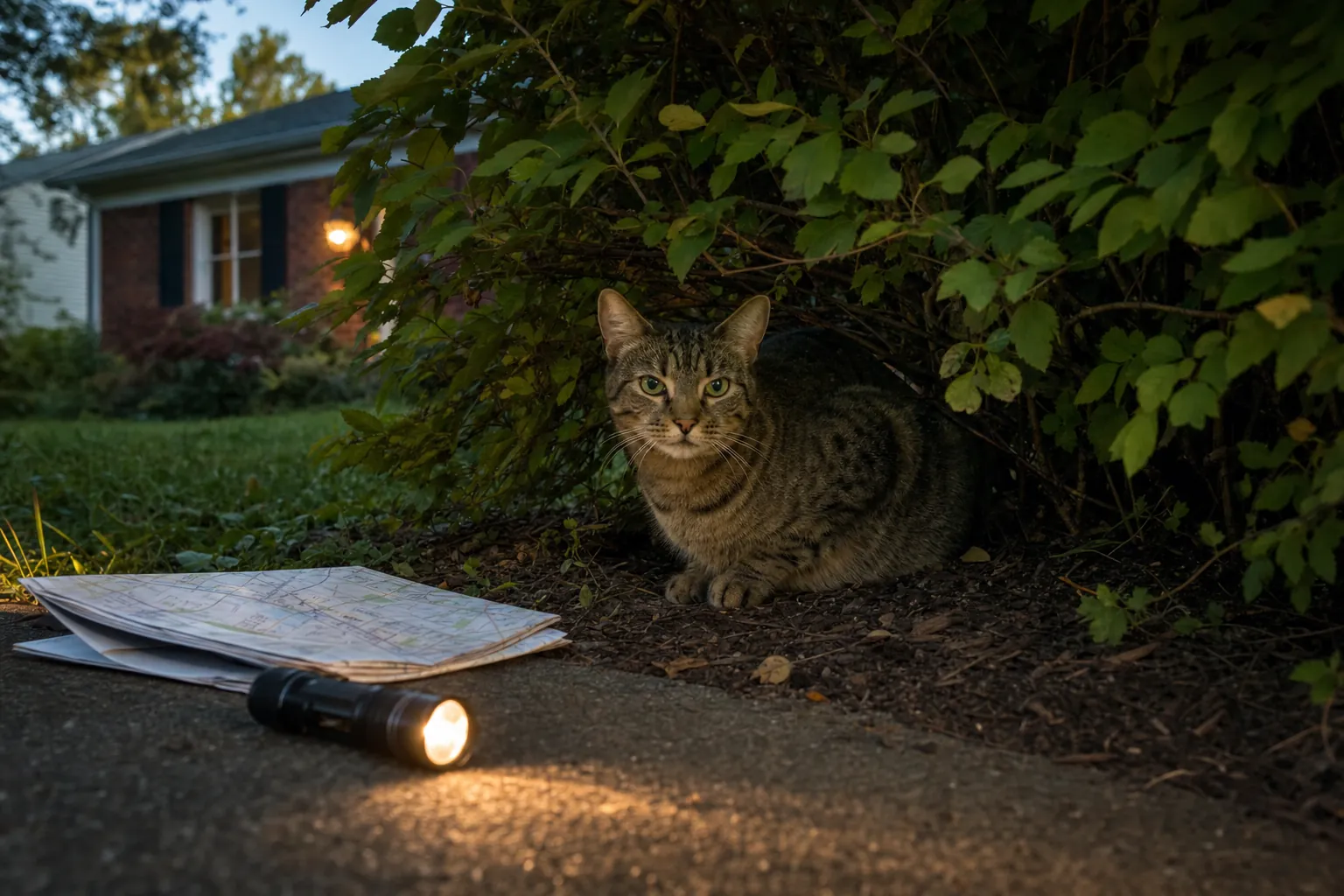
Lost Pet Searches
How Far Do Lost Cats Travel? Start Close First
A practical way to set a search radius for a missing cat, use behavior instead of guesswork, and expand only when real sightings point the way.
Read the guide →