A missing cat in cold weather can make every choice feel urgent. The most useful response is urgent without becoming chaotic: search close and carefully, reduce the weather risks you can control, and give neighbors a clear way to help.
This guide supports practical search work. If your cat is near traffic, water, severe weather, or appears injured, contact the appropriate local authority or veterinarian first.
Start close, and search places that hold warmth and cover
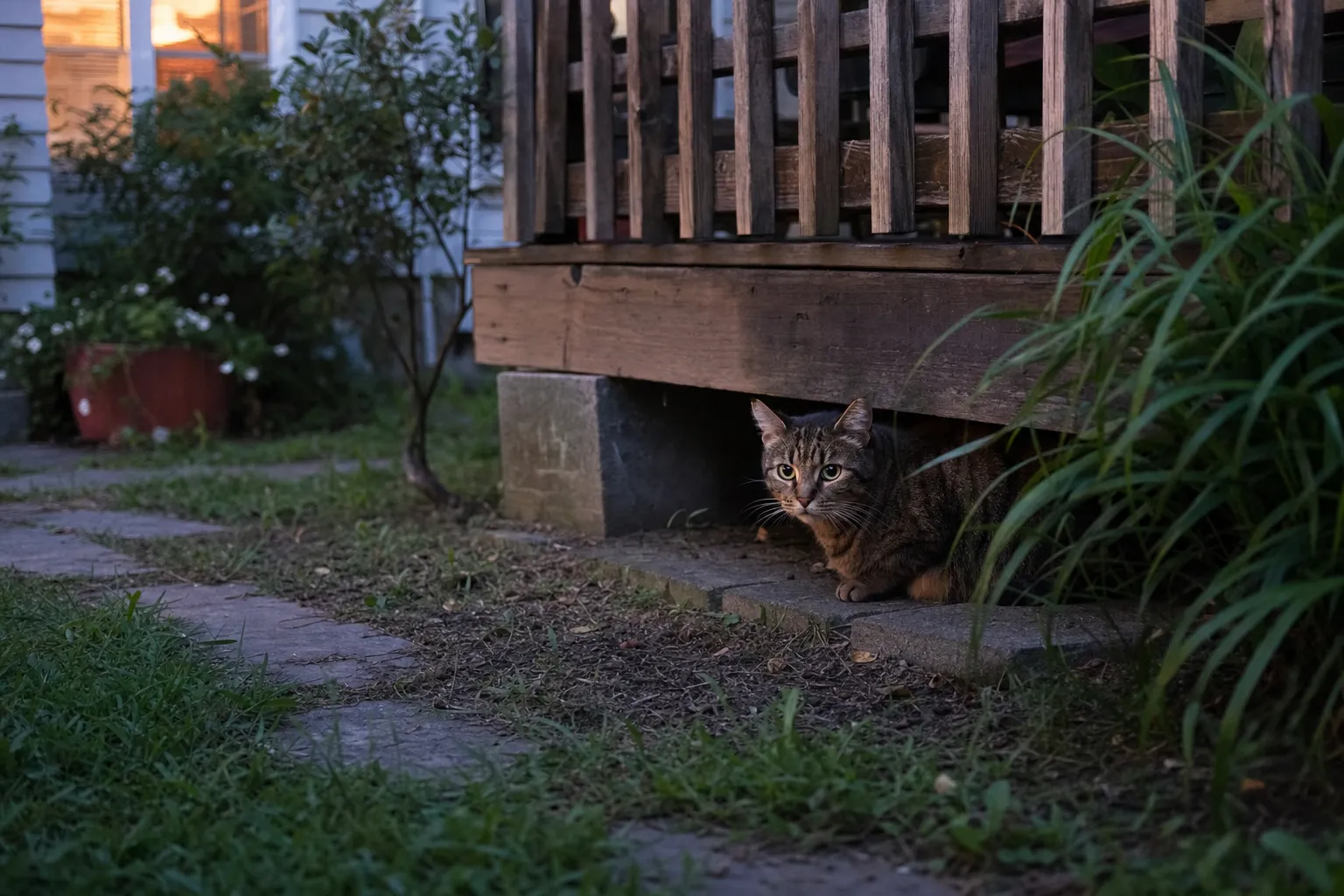
A frightened cat, especially one who normally lives indoors, may hide silently rather than travel in a straight line. Begin at the last confirmed point and make a slow, repeated check of the home, porch, yard, nearby shrubs, decks, sheds, garages, crawl spaces, and parked vehicles. Ask neighbors for permission before looking on their property.
The ASPCA’s lost-pet guidance recommends a careful home search followed by a slow neighborhood search and direct conversations with neighbors. In cold weather, covered places deserve special attention because wind, wet ground, and snow can change where a cat settles.
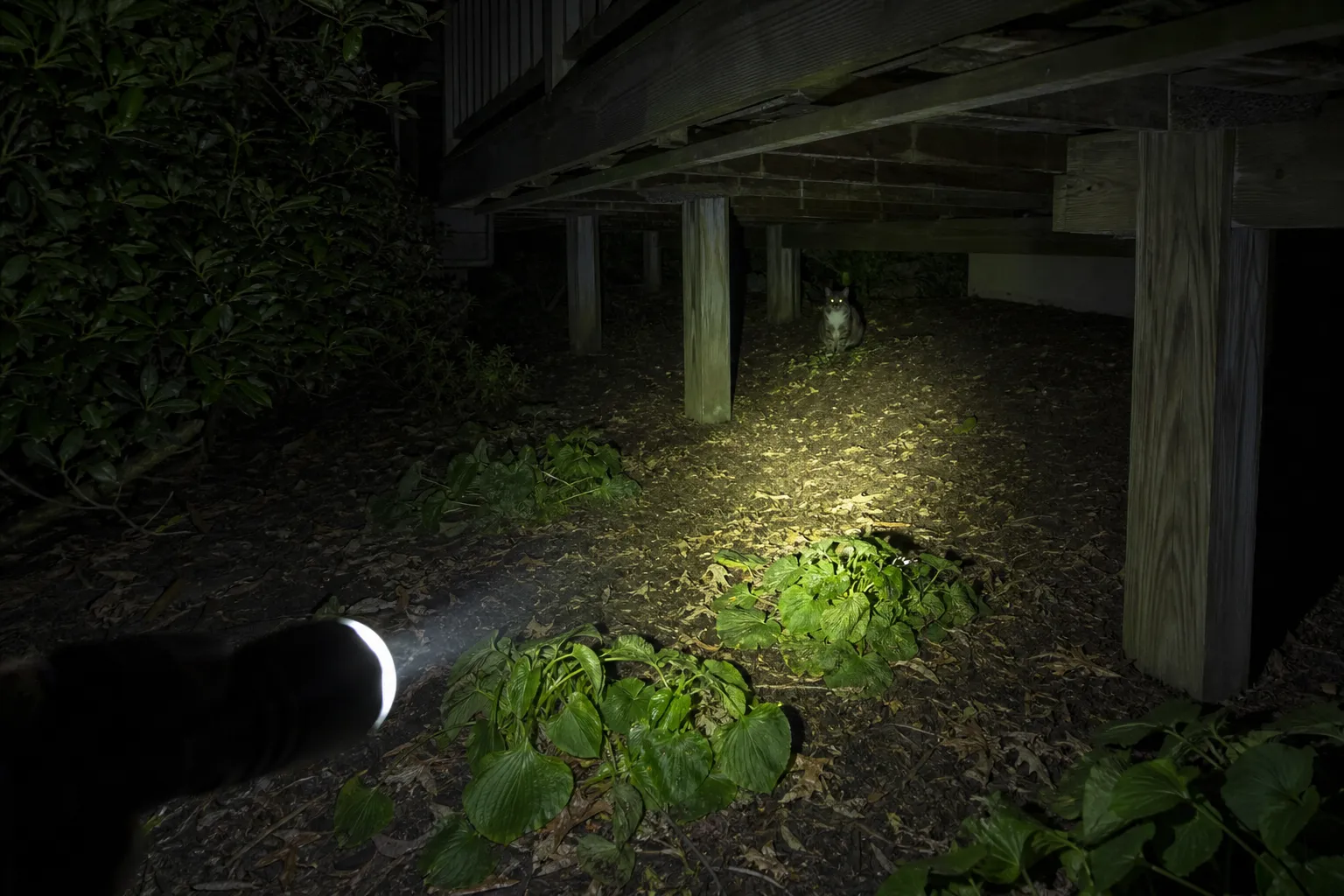
Make a calm first-hours plan
Write down the time your cat was last seen, the exit point, weather conditions, and every checked location. Give one person responsibility for the sighting log. A clear record prevents helpers from repeating the same area while other urgent places go unchecked.
Call local shelters, animal control, veterinary clinics, and the microchip registry early. Share a recent photo, your contact details, and a concise description. The site’s lost-cat search plan explains how to organize that wider response without losing the close-to-home search.
Use winter safety, not guesswork
Cold weather brings extra hazards, but it does not tell you exactly where your cat is. The Cornell Feline Health Center notes that cold, wind, snow, and ice can raise risks of hypothermia and frostbite, and that cats may seek warmth around vehicles. Before starting a car, check wheel wells and make noise at the hood so a sheltered cat has a chance to move away.
Keep antifreeze, salt, and other winter chemicals secured and clean up spills promptly. If your cat returns wet, weak, confused, shivering, or injured, contact a veterinarian right away. Do not rely on home treatment for a serious cold exposure.
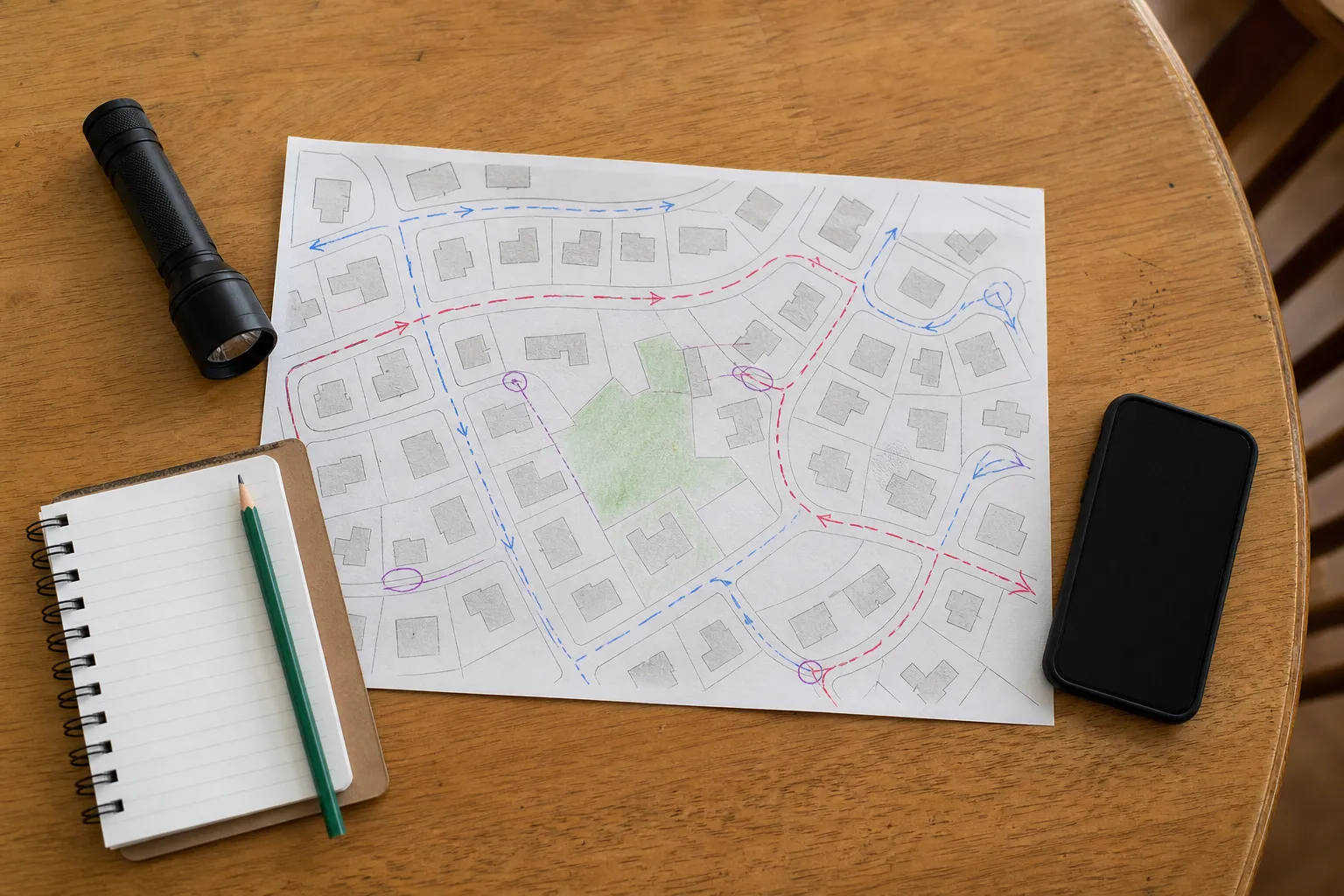
Invite useful help without creating pressure
Give neighbors one short request: please check enclosed spaces, do not chase, and send the exact time, location, and a photo if it is safe. Ask them to look before closing a garage or shed. A sighting can be valuable even when your cat does not come close enough to catch.
If you use a food station, camera, or humane trap, keep it monitored and follow local recovery guidance. Do not leave equipment unattended in dangerous weather. For a quiet after-dark approach, use the lost-cat nighttime plan; for a cat who may return on their own terms, see what to do while keeping a safe path home.
Support the search without replacing it
Practical action comes first: close searching, neighbors, shelters, veterinary care, accurate sightings, and a plan that is safe in the weather. Lindsey’s Lost Pet Location Protocol can offer supportive intuitive work alongside those efforts. It does not provide live tracking or guaranteed outcomes.
A safer winter search checklist
- Record the last confirmed time and place.
- Search close hiding places slowly and more than once.
- Ask neighbors to check warm, enclosed spaces.
- Keep a clear sighting log and share one calm instruction.
- Check vehicles before starting them.
- Call veterinary care promptly after a cold-weather recovery.
Frequently asked questions
Should I keep searching if it is freezing?
Keep searching only when it is safe for you and your helpers. Use short, organized checks close to home, and contact local help when there is an immediate hazard.
Where should I look first?
Ask neighbors for permission to check under porches, decks, sheds, garages, crawl spaces, and vehicles. A frightened indoor cat may stay very close and choose cover rather than travel far.
What should I do if I find my cat cold or weak?
Move them gently to a safe, warm place and contact a veterinarian promptly. Do not assume a cat is fine simply because they made it home.
Can Lindsey help during an active lost-cat search?
Lindsey’s Lost Pet Location Protocol is supportive intuitive work for guardians who are also using practical search steps. It does not replace emergency services, shelters, veterinary care, or a safe plan on the ground.
Related posts
Lost Pet Searches
How to Find a Lost Cat: A Practical Search Plan
A calm, practical guide to searching close, asking for access, using humane tools, and building a plan when your cat is missing.
Read the guide →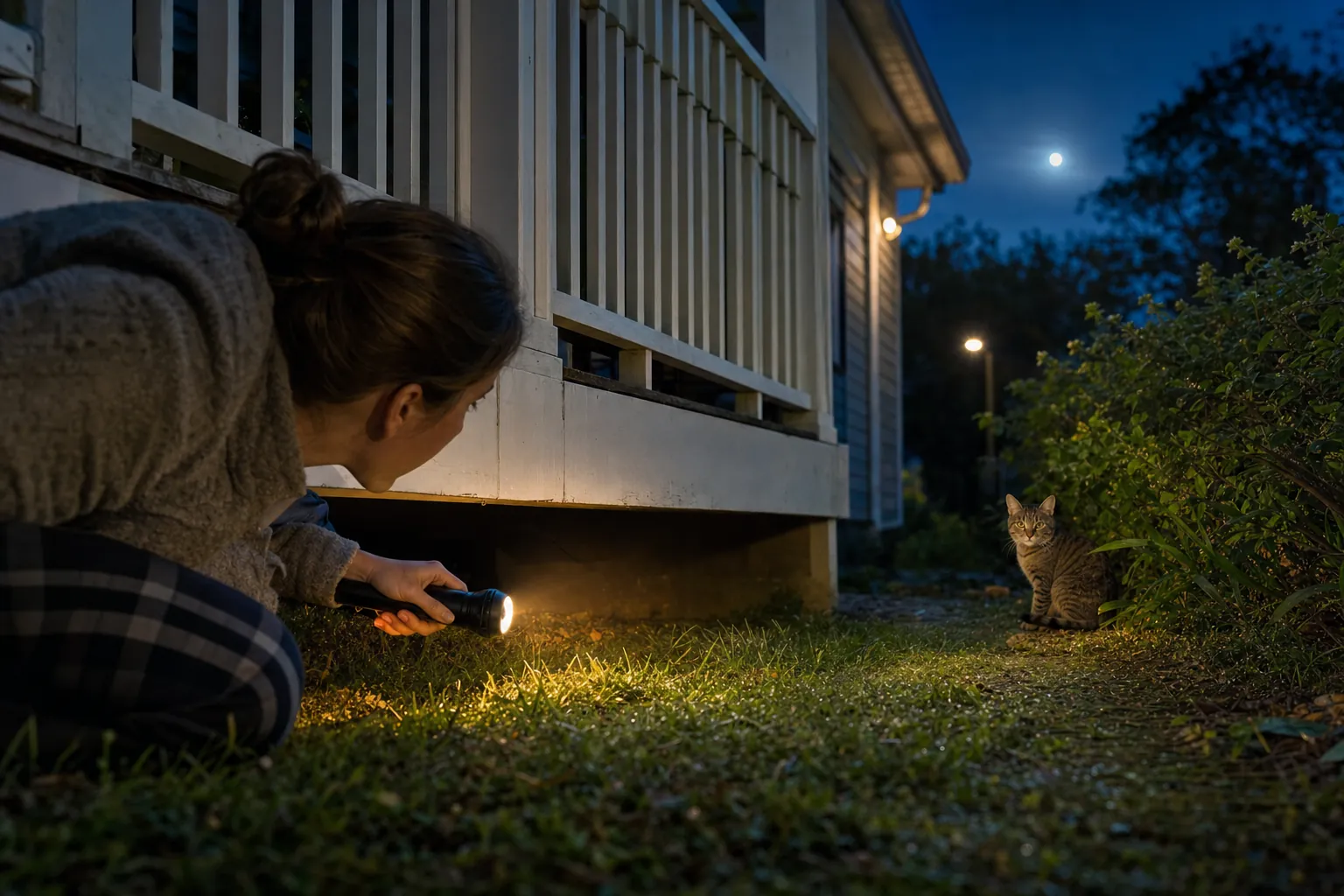
Lost Pet Searches
How to Find a Lost Cat at Night: A Calm Plan
A quiet, practical nighttime search plan for checking close hiding places, gathering sightings, and helping a missing cat feel safe enough to return.
Read the guide →
Lost Pet Searches
Lost Dog in Cold Weather: A Safety-First Search Plan
A calm plan for protecting a missing dog, gathering useful sightings, and keeping a cold-weather search safe for everyone involved.
Read the guide →