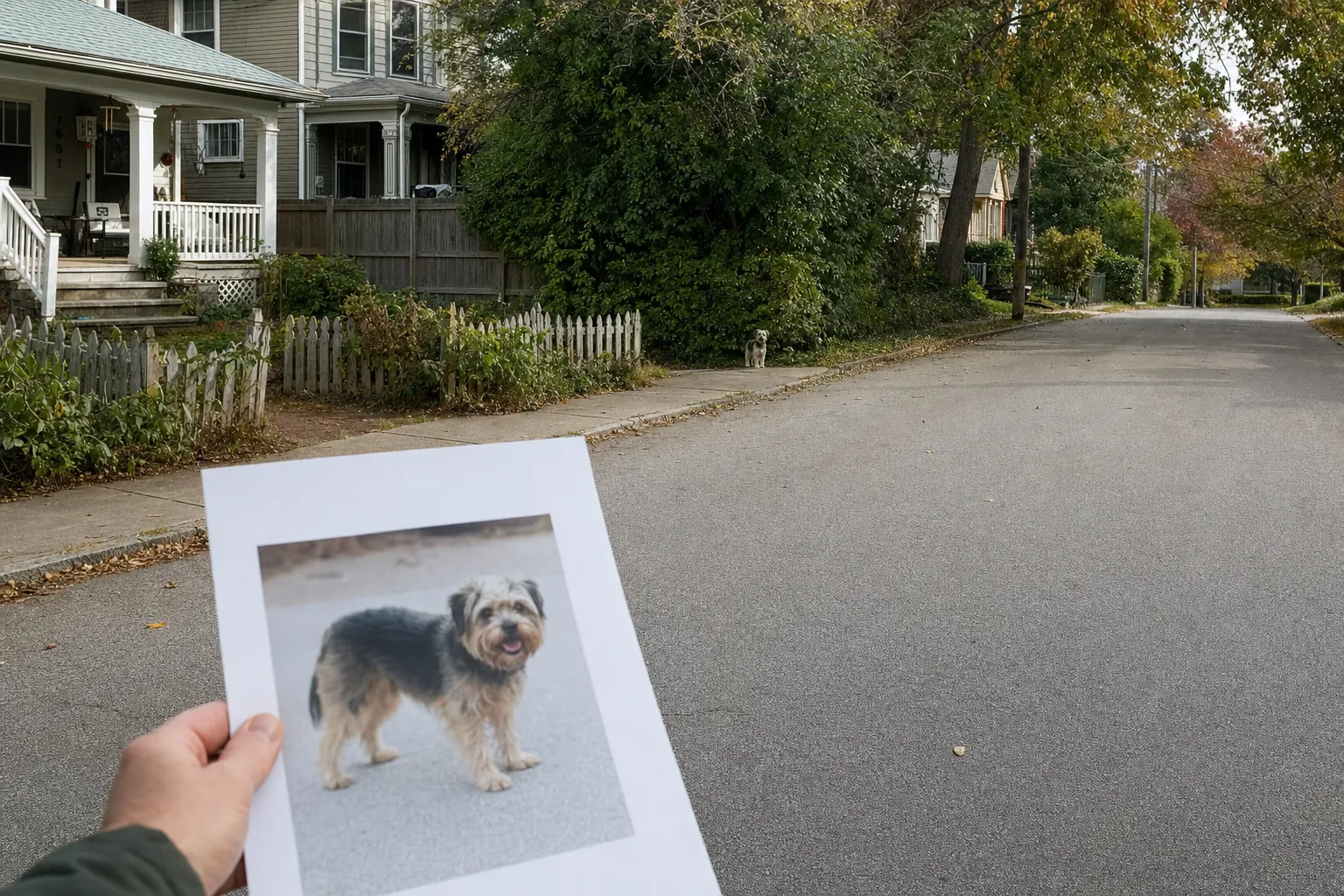
When a dog is missing in cold weather, the fear can make every minute feel urgent. A useful response is urgent without becoming reckless: protect your dog from the conditions, protect the people searching, and keep the information clear enough for local help to act. Cold, wind, wet ground, snow, ice, and early darkness all change the practical decisions around a search.
This guide is for guardians responding to an active lost-dog situation during cold weather. It does not replace emergency services, animal control, veterinary care, experienced lost-pet recovery professionals, or safe on-the-ground judgment. If your dog is near traffic, water, thin ice, severe weather, injury, or another immediate hazard, call the appropriate local authority first.
Start with the last confirmed point, not the widest possible search
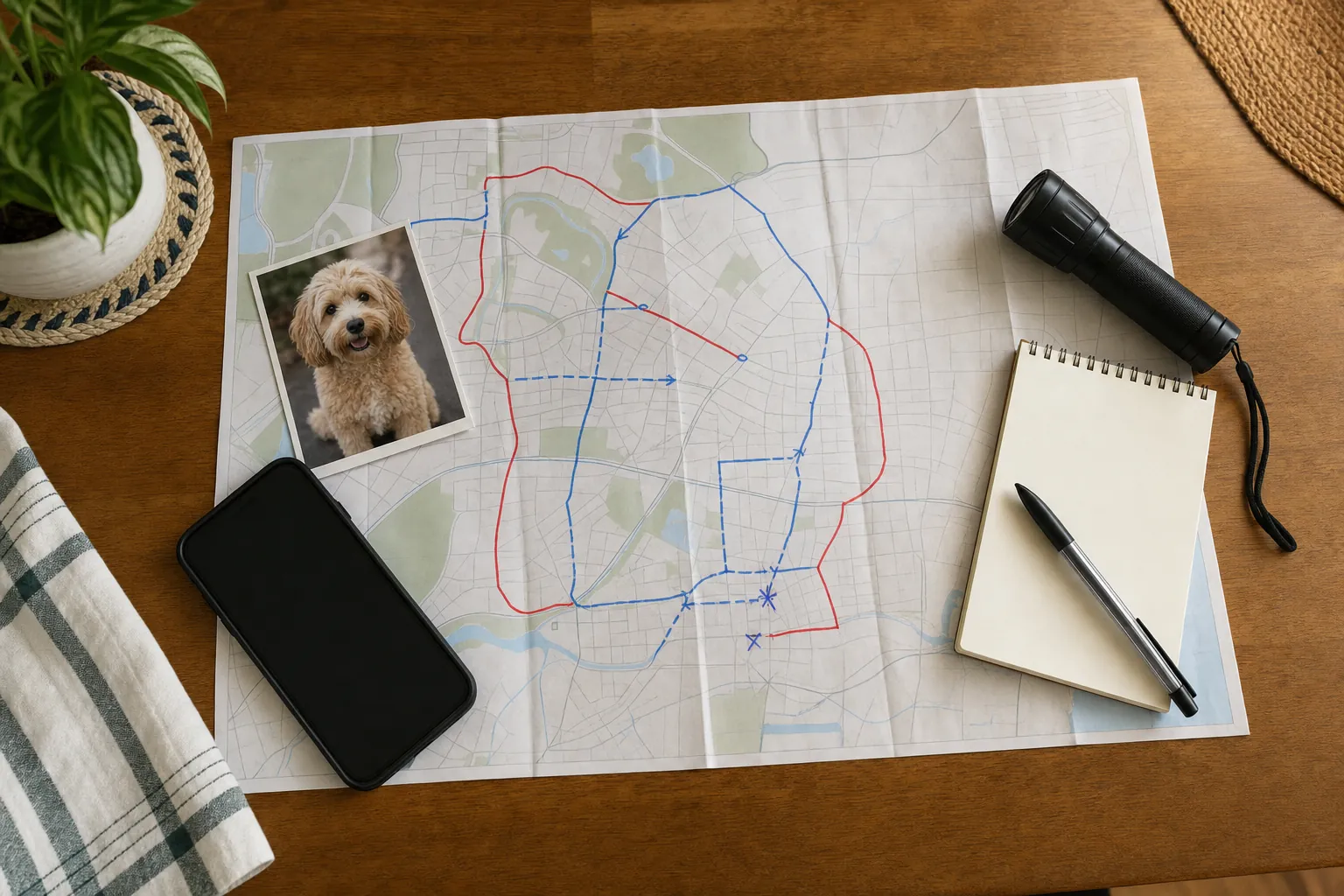
Write down the last confirmed place, time, direction of travel, weather, and anything that may have startled your dog. Mark the place on a map if you can safely do so. A current sighting, a photo, or a neighbor who knows your dog is stronger information than a vague report shared hours later. Keep one person responsible for the log so new information does not disappear into group messages.
Begin nearby. Check the home, yard, parked cars, sheds, garages, porches, and familiar hiding places before pushing farther out. The ASPCA's lost-pet guidance similarly recommends a careful home search followed by a slow neighborhood search and direct conversations with neighbors. In cold weather, an enclosed spot can matter as much as an open route.
Call local animal control, shelters, veterinary clinics, emergency veterinary hospitals, and rescue groups early. Give them a recent photo, a clear description, your contact information, and the time and place your dog was last seen. If your dog is microchipped, report them missing with the registry and check that the contact details are current. Ask how they want updates handled, then follow up regularly.
Make the search safe for people, too
Cold searches wear people down quickly. Dress in layers, keep spare dry socks and gloves available, bring charged phones and a backup light source, and tell a trusted person where you are going. Work with a buddy when conditions or terrain call for it. If weather, darkness, or fatigue makes the search unsafe, pause and set a clear plan for the next check-in rather than pushing until someone else needs help.
Snow and ice can hide holes, curbs, water, and unstable ground. Do not send helpers across frozen ponds, into closed trails, or onto private property without permission. If a sighting is near a busy road, bridge, rail line, water, or severe-weather area, call for local professional help rather than trying to contain a frightened dog yourself.
Keep a small coordination point in a safe, permitted location, such as your vehicle or a nearby home. It gives helpers one place to return to with sightings, warm up, and learn what has already been checked. Do not turn it into a crowd around a live sighting. A calm, limited response creates less pressure for a dog who may already be frightened.
Turn cold-weather urgency into useful information
Cold weather changes risk, but it does not tell you exactly where a dog will go. Avoid assumptions such as “they must be close” or “they will follow a road home.” Use real observations instead. When someone sees your dog, ask for the exact location, time, direction of travel, a photo or video if safe, whether the dog looked wet or injured, and nearby features such as cover, a fence line, a porch, a creek, or traffic.
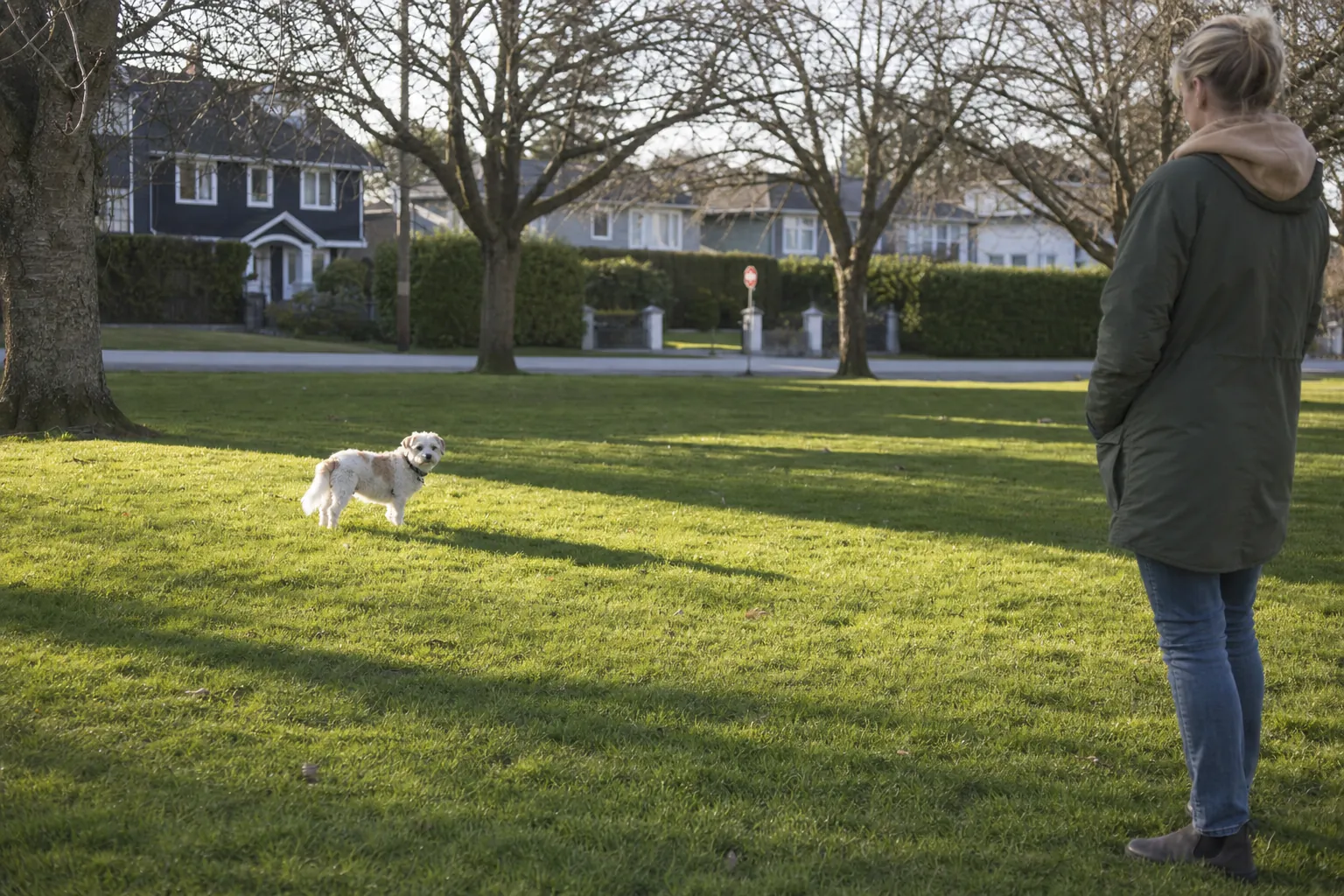
Give every helper the same short instruction: do not chase, call, corner, or try to grab a frightened dog. The guide to lost dog behavior explains why fear can override normal recall, even with a loving guardian nearby. Quiet observation may give you a better lead than a rushed approach that sends your dog farther into the cold.
Use a consistent flyer and online notice. The ASPCA advises a bold lost-pet headline, a recent photo, a description, the time and place last seen, and reliable contact details. The site's lost dog flyer template can help you make that message easy to recognize without crowding the page. Ask people to report what they saw, not to post live locations publicly or gather others around a sighting.
Plan around the weather instead of reacting to it
Check the forecast for the next several hours, not just the temperature outside your door. Wind, rain, snow, ice, and the timing of sunset affect visibility, road safety, and how long people can work effectively. Share a simple plan with the small group helping: who is checking messages, who is contacting shelters, which nearby streets or properties have been checked, and when everyone will stop to warm up and compare notes.
Keep the search flexible. A new verified sighting can change the plan. A severe-weather warning, icy road, or exhausted helper should change it too. The goal is not to keep moving every minute. It is to preserve the clearest information and make it easy for the right person to respond when your dog is seen. Write down what still needs checking so a pause does not turn into lost work.
For a nighttime search, carry lights but do not sweep them wildly through yards, traffic, or a dog's hiding place. Move slowly and use the light to see hazards, track your own route, and observe from a distance. If you receive a sighting after dark, ask the reporter to stay safely where they are if possible, then get the exact address or landmark before anyone moves in. The site's nighttime lost-dog guide offers a more detailed plan for organizing those hours.
Cold weather can make it tempting to bring a large group together quickly. More people are not always more useful. Assign specific tasks and keep the active search small when a dog is frightened or a sighting is recent. One person can update online notices, another can call local organizations, and another can keep the log. That structure protects your energy and reduces the chance that several people repeat the same ground.
Keep your phone and your message useful. Share the same recent photo, a plain description, the last confirmed area, and one contact route each time. If a sighting comes in, thank the person and ask for the details before posting anything new. A short, steady update is easier for neighbors to act on than a stream of conflicting messages. It also gives shelters, veterinarians, and local recovery support a clearer record if they join the effort.
When a dog has medical needs, is very young or elderly, is wet, or has a short coat, say so when you ask for help. Those facts are not a reason to panic, but they matter to the local professionals deciding what response is appropriate. Share the dog's name, microchip details if available, medication needs, and the safest number to reach you. Keep a second trusted contact available in case your phone battery runs low or you need to step away to warm up.
Know the cold-weather hazards after your dog is found
Once your dog is recovered, bring them to a warm, dry, safe place and contact a veterinarian promptly if they appear unwell. The American Animal Hospital Association notes that cold exposure can lead to frostbite and hypothermia, with extra vulnerability for small dogs, seniors, and short-coated dogs. Signs that need prompt attention include shivering, weakness, pale or cool skin, confusion, lethargy, slow breathing, swelling, discoloration, or pain when touched.
If you suspect frostbite, do not rub or massage the area. AAHA advises gentle warming with warm, never hot, water and prompt veterinary care. If you suspect hypothermia, use warm blankets and wrapped warm water bottles while you contact a veterinarian. Avoid trying to solve a serious exposure problem with a hot bath or rapid heat. Gradual warming and professional advice are safer.
Be alert to winter chemicals as well. The AAHA cold-weather safety guidance warns about ice melt, salt, antifreeze, and hazards concealed beneath snow. If you think your dog may have eaten antifreeze or another toxin, contact a veterinarian or poison-control resource right away. Note the product if you can do so safely, but do not delay care to investigate it.
Use food, familiar items, cameras, and traps carefully
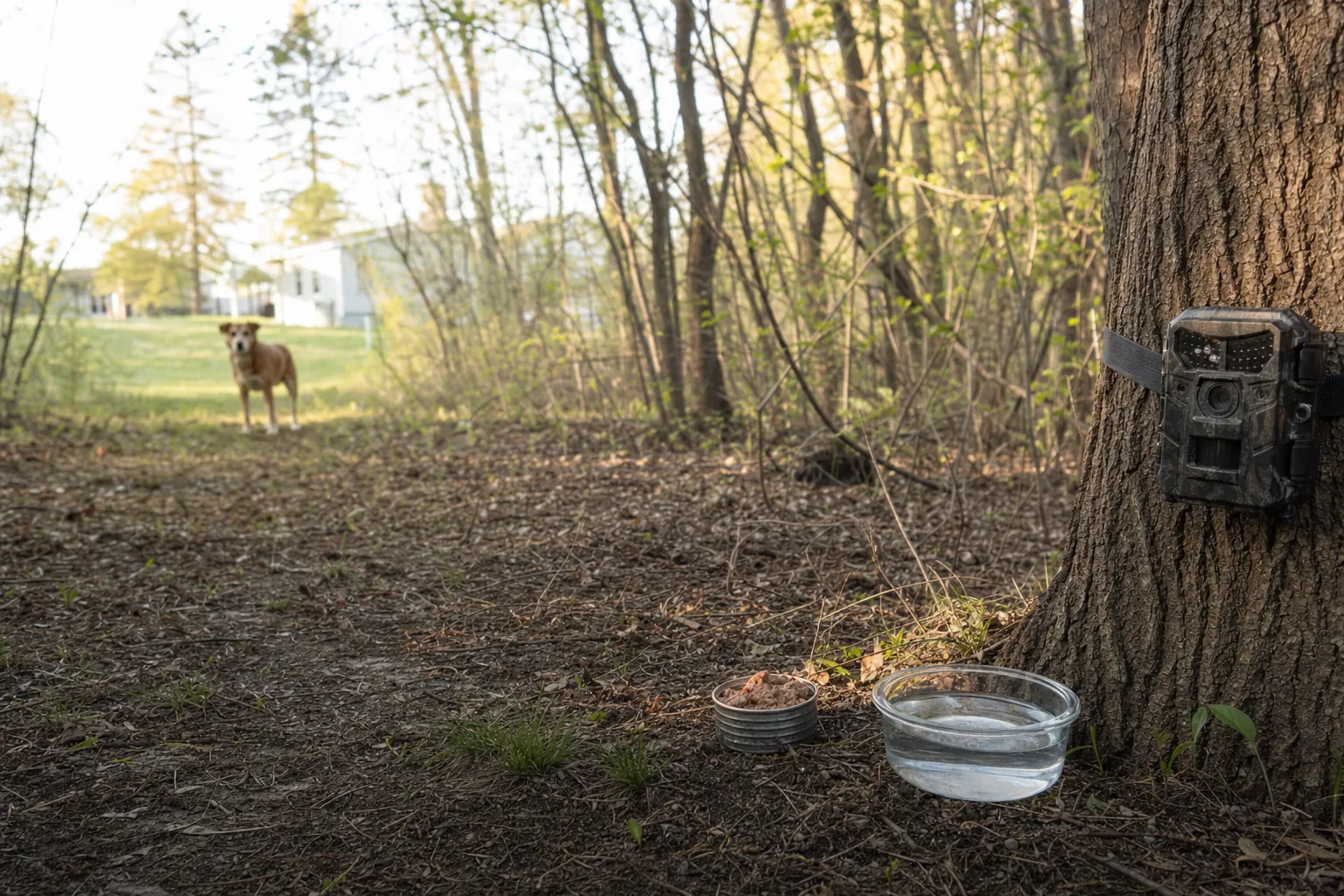
It is tempting to leave food everywhere when a dog is missing. Scattered food can attract wildlife, make reports harder to interpret, and create trouble on someone else's property. If an experienced local recovery professional advises a feeding or observation location, keep it safe, permitted, and documented. Know where it is, who is monitoring it, and what the next step will be if your dog appears.
Familiar items can sometimes support a safe checkpoint, but they are not a promise that a dog will return. Choose a place that is accessible and does not create a traffic, wildlife, fire, or litter risk. Do not leave valuables, equipment, or food unattended in a way that draws people or animals into danger. A camera or humane trap should be used only with a clear plan and qualified local advice.
Cold rain, snow, and wind can quickly change a setup. Check it rather than assuming it is working. The American Red Cross advises keeping animals protected from wind and ensuring access is not blocked by snow or ice. That same practical thinking applies to a carefully planned checkpoint: keep people safe, do not create another hazard, and adjust when conditions change.
Support the search without replacing practical help
Practical help comes first: local authorities, shelters, veterinary care, safe handling, clear sightings, and a steady record. Lindsey's Lost Pet Location Protocol is supportive intuitive work for guardians who are already taking those practical steps. It does not replace emergency services, animal control, shelters, veterinary care, trained recovery teams, or a safe search plan. It does not offer live tracking or guaranteed outcomes.
If someone safely contains a dog who may be separated from their guardian, What to Do If You Find a Lost Dog explains responsible next steps for identification and reunion. If a dog is visible but frightened, use how to catch a scared lost dog safely before attempting a fast approach. For a calm plan after dark, read How to Find a Lost Dog at Night.
A cold-weather lost-dog checklist
- Record the last confirmed location, time, direction, and weather.
- Search close hiding places first, then widen only when real sightings point the way.
- Call local shelters, animal control, veterinary clinics, and the microchip registry.
- Keep one log for every sighting, photo, time, direction, and follow-up.
- Ask helpers not to chase, call, corner, or crowd a frightened dog.
- Protect searchers with layers, lights, safe check-ins, and clear stop points.
- Seek veterinary help promptly after recovery if cold exposure or toxin contact is possible.
Frequently asked questions
What should I do first if my dog is lost in cold weather?
Start with the last confirmed place and time, then call local animal control, shelters, veterinary clinics, and any appropriate emergency service when there is immediate danger. Share a recent photo and keep one record of sightings. Do not send people running into unsafe weather or traffic.
Should I search all night if it is freezing?
Not if doing so puts you or helpers at risk. Arrange safe check-ins, use warm layers, work in pairs where appropriate, and pause when weather, darkness, or fatigue makes the search unsafe. A coordinated plan is more useful than exhausted people taking risks.
Can I leave food outside for a lost dog in winter?
Food can sometimes be part of a plan, but do not scatter it or leave it where it creates wildlife, traffic, or property problems. Keep track of any feeding location and ask a qualified local recovery professional for advice before using cameras, traps, or other equipment.
What cold-weather signs need urgent veterinary help?
If a dog is recovered with shivering, weakness, confusion, slow breathing, pale or cool skin, frostbite signs, or suspected chemical exposure, move them to safety and contact a veterinarian promptly. Do not use very hot water or rub a frostbitten area.
How can neighbors help without making a frightened dog run farther?
Ask neighbors to watch quietly, share exact times and locations, and avoid chasing, calling, feeding, or gathering a crowd around a sighting. A photo or short video from a safe distance can be more helpful than an attempted grab.
Related posts
Lost Pet Searches
Lost Dog Behavior: Why a Frightened Dog May Not Come When Called
A calm guide to understanding how fear can change a missing dog’s behavior, responding safely to sightings, and keeping a search from becoming a chase.
Read the guide →Lost Pet Searches
How to Find a Lost Dog at Night: A Practical Search Plan
A steady, practical nighttime search plan for organizing the first hours, responding safely to sightings, and bringing a missing dog home.
Read the guide →
Lost Pet Searches
How to Catch a Scared Lost Dog Safely
A calm, safety-first guide to helping a frightened loose dog without chasing, cornering, or adding more pressure.
Read the guide →